November 2007 Newsletter from
"This Day in North American Indian History"
by Phil Konstantin
Copyright © Phil Konstantin (1996-2010)
Click Here To Return To The Previous Website
.
.
.
.
============================================================
Start of Phil Konstantin's November 2007 Newsletter - Part 1
============================================================

Greetings,

The fires you may have heard about here in San Diego County are
all under control now. At last count, 9 people died - 1500+
homes were lost and over 300,000 acres were burned. I worked
12 hour shifts for about a week. That was noting compared to
many of the firefighters who were working around the clock.
Thanks to all of you who checked in to see if I was OK.

You can learn a lot about the fire at this website:
http://sdcountyemergency.com/

Many of the areas burned in the fires were on reservations.
San Diego County has 19 reservations. The San Diego Foundation
has started an emergency fire relief fund for the tribes.
Donations can be made online at:
http://www.sdfoundation.org/fire2007/
or
http://www.kintera.org/autogen/home/default.asp?ievent=254099
San Diego Indian Reservation Fire Relief and Recovery Fund "

-----

Last month, I finally got to see the movie "Bury My
Heart At Wounded Knee" which showed on HBO recently. I would
be interested in what you thought of this movie, if you saw.
Please send me your comments, and I will add them to my next
newsletter.

Here's a reminder for those of you in the San Diego,
California area. The San Diego Cherokee Community meets
(usually) on the 4th Sunday of each month. Please feel free
to attend any of our meetings. You do not have to be a Cherokee
to participate. You can find all the appropriate information
at out website:
http://www.sandiegocherokeecommunity.com

Phil


=======================
X+X+X+X+X+X+X+X+X+X+X+X
=======================
X+X+X+X+X+X+X+X+X+X+X+X
=======================


Featured Links of the Month for November 2007

This month's Link of the Month is about my most recent trip
to Utah. I often visit old friends in Utah. Each visit usually
finds us exploring this amazing area. I was there for a week
in early October. As usual, I took LOTS of photos. Here is
your chance to visit some of these amazing places vicariously.
Some of the places we went: Bridal Veil Falls is a nice
waterfall east of Provo ... Dinosaur National Monument is an
amazing geological area where many dinosaur bones and ancient
American Indian petroglyphs have been found ... Utah Field
House of Natural History State Park Museum has many
interesting exhibits ... The Red Fleet Dinosaur Trackway
is a place where you can see dino tracks in the rocks ...
Flaming Gorge is a very large canyon lake in northern Utah
& southwestern Wyoming .... I also took pictures from the
plane over Southern California, Phoenix, Grand Canyon, Zion
& Bryce Parks.

You can see all of the pictures on my website at:
http://americanindian.net/utah2007.html


=======================
X+X+X+X+X+X+X+X+X+X+X+X
=======================
X+X+X+X+X+X+X+X+X+X+X+X
=======================

The Treaty of the Month is the TREATY WITH THE CHASTA, ETC., 1854.

Nov. 18, 1854. | 10 Stats., 1122. | Ratified Mar. 3, 1855. | Proclaimed
Apr. 10, 1855.

You can see a transcript of the treaty at this website:
http://digital.library.okstate.edu/kappler/Vol2/treaties/cha0655.htm


=======================
X+X+X+X+X+X+X+X+X+X+X+X
=======================
X+X+X+X+X+X+X+X+X+X+X+X
=======================

My latest writing effort has just come out. It is titled:
"Native American History For Dummies." As I may have
mentioned is previous newsletters, they were not sure how
they were going to credit me for my work on this book. I
wrote 6 of the 24 chapters. I as also the technical editor
for the remaining chapters. I was credited in the book as
being the technical editor. It is a pretty good book for
the material it covers. It is done in the typical
"Dummies" format, so it is not overly detailed, and it
is easy to read. You might enjoy it.

Book Description: Native American History For Dummies
introduces readers to the thousand-year-plus history
of the first inhabitants of North America and explains
their influence on the European settlement of the
continent. Covering the history and customs of the
scores of tribes that once populated the land, this
friendly guide features vivid studies of the lives of
such icons as Pocahontas, Sitting Bull, and Sacagawea;
discusses warfare and famous battles, offering new
perspectives from both battle lines; and includes new
archaeological and forensic evidence, as well as oral
histories that show events from the perspective of these
indigenous peoples. The authors worked in concert with
Native American authorities, institutions, and historical
experts to provide a wide range of insight and information.

Here is a link to where it is being offered at Amazon.
http://www.amazon.com/gp/product/0470148411?ie=UTF8&tag=onthisdateinn-20&linkCode=as2&camp=1789&creative=9325&creativeASIN=0470148411


=======================
X+X+X+X+X+X+X+X+X+X+X+X
=======================
X+X+X+X+X+X+X+X+X+X+X+X
=======================

Notices:
--------


For Immediate Release
Office of the Press Secretary
October 31, 2007

National American Indian Heritage Month, 2007
A Proclamation By the President of the United States of America


National American Indian Heritage Month is an opportunity to
honor the many contributions of American Indians and Alaska
Natives and to recognize the strong and living traditions of
the first people to call our land home.

American Indians and Alaska Natives continue to shape our
Nation by preserving the heritage of their ancestors and by contributing
to the rich diversity that is our country's
strength. Their dedicated efforts to honor their proud
heritage have helped others gain a deeper understanding of
the vibrant and ancient customs of the Native American
community. We also express our gratitude to the American
Indians and Alaska Natives who serve in our Nation's military
and work to extend the blessings of liberty around the world.

My Administration is committed to supporting the American
Indian and Alaska Native cultures. In June, I signed the
"Native American Home Ownership Opportunity Act of 2007,"
which reauthorizes the Indian Housing Loan Guarantee Program,
guaranteeing loans for home improvements and expanding home
ownership for Native American families. Working with tribal governments,
we will strive for greater security, healthier lifestyles, better
schools, and new economic opportunities
for American Indians and Alaska Natives.

During National American Indian Heritage Month, we underscore
our commitment to working with tribes on a government to
government basis and to supporting tribal sovereignty and
self-determination. During this month, I also encourage
Federal agencies to continue their work with tribal
governments to ensure sound cooperation. Efforts such as
on-line training programs will improve interagency
collaboration in the Federal Indian Affairs community and
help to strengthen relationships with tribes, building a
brighter future for all our citizens.

NOW, THEREFORE, I, GEORGE W. BUSH, President of the United
States of America, by virtue of the authority vested in me
by the Constitution and laws of the United States, do hereby
proclaim November 2007 as National American Indian Heritage
Month. I call upon all Americans to commemorate this month
with appropriate programs and activities.

IN WITNESS WHEREOF, I have hereunto set my hand this thirty-
first day of October, in the year of our Lord two thousand
seven, and of the Independence of the United States of
America the two hundred and thirty-second.

GEORGE W. BUSH
http://www.whitehouse.gov/news/releases/2007/10/20071031-2.html


----------------------------


Please share this vacancy announcement with friends
and colleagues:

Associate Director for Community and Constituent Services
SL-1001-00
Salary: $132,437 – $154,600
Announcement #EX-08-01

VACANCY CLOSES: November 30, 2007

JOB DESCRIPTION: The Smithsonian’s National Museum of the
American Indian (NMAI) is responsible for affirming to Native
communities and the general public, the historical and
cultural achievements of the Native peoples of the Western
Hemisphere. The NMAI in Washington, D.C. seeks a highly
experienced professional to lead and manage the Community
and Constituent Services Department. The Associate Director
is responsible for overall planning, management and
coordination of community services programs and international
activities. These include repatriation projects and relationships;
outreach, training, and technical support for Native communities;
programs with international organizations (and related cultural
protocols), both within the Western Hemisphere and beyond; collaborative
projects with and presentations for agencies
assisting indigenous people worldwide; and support of alliances
and collaborations with cultural service institutions. The
Associate Director manages, through subordinate office heads,
approximately 40 professional, technical and support staff,
as well as a variety of contractors, and typically oversees
major projects ranging up to $1M, or more. Serves as a member
of the Museum Action Committee (MAC) and participates with the Director
in the overall planning, direction and management
of the museum’s programs and operations. Provides leadership
in planning and management of the museum projects for all
phases, including conception, development, and implementation.
Manages and directs assigned museum cross functional project
teams in pertinent functional areas, including Native
consultants, participants, and communities. Ensures completed
projects within scope, schedule, and budget, with a keen focus
on effective and consistent communication. In this capacity,
the incumbent is accountable to the Director and acts as l
iaison, facilitator, catalyst, communicator, and negotiator.

QUALIFICATIONS
Applicants must clearly demonstrate the necessary level of
managerial and leadership skills and technical competence
required to perform successfully in this position. This includes
one year of specialized experience. Specialized experience is
defined as in or related to the work of this position, and that
has equipped the applicant with the knowledge, skills, and
abilities needed for successful performance. The experience
must demonstrate accomplishment of management assignments that
require a wide range of knowledge of museum programs related
to community services, repatriation, international relations,
fellowships and visiting scholars and inter-institutional
alliances and relations. Applicants must also possess knowledge
encompassing the history and diversity of Native peoples and
their cultural achievements; and the role and importance of traditional
culture in the contemporary Native Community.

FACTORS
The following evaluation factors will be rated by a panel and
used to determine the highest qualified candidates. Attach
additional sheets of paper to your resume to provide detailed
information to support each factor. Do not exceed one page for
each factor. You may use an outline or narrative format to
present concise statements of your experience, accomplishments,
responsibilities, and education as they relate to the factor.

1. Managerial and executive leadership skills in the overall
planning, direction and management of a museum’s programs.

2. Knowledge of and skill in applying project management systems,
methods and techniques in order to direct the planning, management, and
implementation of assigned projects.

3. Interpersonal skills necessary to manage and/or support collaborative
projects and presentations for agencies assisting indigenous people
worldwide, support of projects across museum
and Smithsonian Institution units on matters related to community
services and international activities.

4. Demonstrated experience leading and managing a large and
culturally diverse workforce, including responsibility for implementing
EEO/Affirmative Action policies.

Applications must be received by the closing date and may be
submitted in the following ways:

Mail: Smithsonian Institution, Office of Human Resources,
P.O. Box 23772, Capital Gallery Suite 5060 MRC 517 Washington, DC
20026-3772 Fax: (202) 633-6402. You do not need to submit a cover
sheet. Write the Announcement Number on all pages faxed.

Hand Deliver or FEDEX: 600 Maryland Avenue SW, Capital Gallery Bldg.
Suite 100W Washington, DC 20024

For further information, please contact: (202) 633-6370 or
www.si.edu/ohr and submit applications according to instructions.
AN EQUAL OPPORTUNITY EMPLOYER

Leonda J. Levchuk (Navajo)
Public Affairs Specialist
National Museum of the American Indian
4th St. and Independence Ave. SW
Washington, DC 20013-7012
(202) 633-6613
(202) 633-6920 fax
levchukl @ si.edu
www.AmericanIndian.si.edu


=======================
X+X+X+X+X+X+X+X+X+X+X+X
=======================
X+X+X+X+X+X+X+X+X+X+X+X
=======================

Article:
--------

TRUE THANKSGIVING A Day of Mourning: Roy Cook, Editor
aisource @ nethere.com

To understand an American Indian perspective on Thanksgiving,
you need some information and some new viewpoints.

Most children know that Native Americans helped the Pilgrims
and were invited to the first Thanksgiving feast. But most
children do not know the following facts, which explain why many
American Indians today call Thanksgiving a "Day of Mourning".

Before the Pilgrims arrived Plymouth had been the site of a
Pawtuxet village which was wiped out by a plague (introduced
by English explorers) five years before the Pilgrims landed.
The nearest other people were the Wampanoag, whose lands
stretched from present day Narragansett Bay to Cape Cod. Like
most other peoples in the area, the Wampanoag were farmers
and hunters.

These Native peoples had met Europeans before the Pilgrims
arrived. One such European was Captain Thomas Hunt, who
started trading with the Native people in 1614. He captured
20 Pawtuxcts and seven Nausets, selling them as slaves in Spain.
Many other European expeditions also lured Native people onto
ships and then imprisoned and enslaved them. These expeditions
carried smallpox, typhus, measles and other European diseases
to this continent. Native people had no immunity and some
groups were totally wiped out while others were severely
decimated. An estimated 72,000 to 90,000 people lived in
southern New England before contact with Europeans. One
hundred years later, their numbers were reduced by 80%. It
was Captain Hunt's expedition that brought the plague, which
destroyed the Pawtnxet. In this same time frame, but much
better known, is Capt. John Smith. He was one who participated
in this area's bounty, although he would have much preferred
to find gold.

Capt. John Smith, has been immortalized for his part in
founding Virginia. In 1614 Smith explored part of the North
American coast-to which he gave the name New England.
Disappointed in his search gold, he set his men to fishing
for cod while he went exploring in the ship's pinnace,
mapping the coastline from Maine to the cape that was named
for the fish.

Smith's map and description of New England and his profits
from cod fishing encouraged the Pilgrims to seek a charter
from the Crown to settle there. Indeed it was the cod that
saved the first New Englanders. In 1640, only eleven years
after Massachusetts Bay Company had been by the Puritans, it
exported three hundred thousand cod to Europe. Cod was soon
also being traded to the West Indies, in exchange for rum and molasses.
In addition, plowing in the cod waste greatly
increased the agricultural productivity of the stony New
England soil. The cod proved a basis of prosperity for New
England so considerable that Adam Smith singled it out for
praise in his Wealth of Nations. To this day, a wooden
sculpture of a cod adorns the Massachusetts Statehouse to
remind the legislators of the source of their state's
greatness.

After the Pilgrims arrived they spent four days exploring
Cape Cod. They found that Native people buried their dead
with stores of corn beans. The Pilgrims dug up many graves,
taking the food. To the native people who had observed
these actions, it was a serious desecration and insult to
their dead. The angry Wampanoags attacked with a small
group, but were frightened off with gunfire. When the
Pilgrims had settled in and were working in the fields,
they saw a group of Native people approaching. Running away
to get their guns, the Pilgrims left their tools behind and
the Native people took them. Not long after, in February of
1621, Samoset, a leader of the Wabnaki peoples, walked into
the village saying "Welcome," in English. Samoset was from
Maine, where he had met English fishing boats and according
to some accounts was taken prisoner to England, finally
managing to return to the Plymouth area, six months before
the Pilgrims arrived. Samoset told the Pilgrims about all
the Native nations in the area and about the Wampanoag
people and their leader. Massasoit. He also told of the
experience of the Pawtuxet and Nauset people with Europeans.
Samoset spoke about a friend of his called Tisquantum
(Squanto), who also spoke English. Samoset left, promising
the Pilgrims he would arrange for a return of their tools.

Samoset returned with 60 Native people including Massasoit
and Tisquantum. Edward Winslow, a Pilgrim, went to present
them with gifts and to make a speech saying that King James
wished to make an alliance with Massasoit. (This was not true.)
Massasbit signed a treaty, which was heavily slanted in favor
of the Pilgrims. The treaty said that no Native person would
harm a white settler or, should they do so, they would be
surrendered to them for punishment. Wampanoags visiting the settlements
were to go unarmed; the Wampanoags and the non-
Indians agreed to help one another in case of attack; and
Massasoit agreed to notify all the neighboring nations about
the treaty. The key figure in the treaty talks and in later encounters
was Tisquantum. He was Pawtuxet who had been
kidnapped and taken to England in 1605. He managed to return
to New England, only to be captured by Captain Hunt and sold
into slavery in Spain. He escaped and returning to this
continent, met Samoset upon a ship. Tiquantum remained with
the Pilgrims for the rest of his life and was in large part responsible
for their survival. The Pilgrims were mainly
artisans, and Tisquantum taught them when and how to plant
and fertilize corn and other crops. He taught them where
the best fish were and how to catch them in traps, and many
other survival skills. Governor Bradford called Tisquantum
"a special instrument sent of God" The Native nations along
the eastern seaboard practiced (and some still participate
in these traditions) some type of harvest feast and ceremony.
The Wampanoag feast, called Nikkomosachmiawene, or Grand
Sachem's Council Feast, is marked by traditional food and
games, telling of stories and legends, sacred ceremonies
and councils on the affairs of the nation. It was because
of this feast in 1621 that the Wampanoags had amassed the
food to help the Pilgrims, creating a new tradition European
tradition known today as "Thanksgiving Day," it lasted
three days. Massasoit came with 90 men and brought five deer
as well as other food, all 55, only five were women.

Massasoit, who had done so much to help the Pilgrims, had
a son named Metacomet. As time went on and more Europeans
arrived and took more land, Metacomet or Prince Phillip as
he came to known and other tribal people began to take notice
of self-serving ethics of the Pilgrims.

But, that is yet another story.

=======================
X+X+X+X+X+X+X+X+X+X+X+X
=======================
X+X+X+X+X+X+X+X+X+X+X+X
=======================

Some historical events for November, picked at random
from my files:

November 1: 1837: The steamboat Monmouth has 611 Creek Indians
on board heading for Indian Territory (present day Oklahoma).
During the night, while traveling upstream in a downstream lane
of the Mississippi River, it strikes the Trenton, which is
being towed downstream. The Monmouth breaks into two pieces
and sinks within a few minutes. 311 Creeks are drowned. Because
of its old age, the Monmouth has been condemned for normal
shipping. This does not stop it from being used to transport
the Creeks. Four of Jim Boy's children are among the dead.


November 2: 1770: Spanish and Opata Indians forces, led by
Bernardo de Gálvez, are on a punitive expedition directed
toward the Apache. Early today they discover an Apache camp
near the Pecos River in modern Texas. The Spaniards and Opata
attack. They kill twenty-eight and capture thirty-six Apaches.
They then return to Chihuahua, Mexico.


November 3: 1786: The government of Georgia hopes to confirm
the Creek Nation boundaries lines. They invite Creek leaders
to a conference on Shoulderbone Creek. Only a few chiefs,
including Fat King and Tame King, attend. The Georgia militia threatens
the attendees with execution if they do not agree to boundary lines
favorable to Georgia. A treaty is signed under
duress by the Creek Chiefs attending the meeting. This action
by the Georgians stokes the flames of the Creeks’ passions
against the settlers.


November 4: 1493: Columbus lands on Guadaloupe in the Caribbean


November 5: 1775: Kumeyaays attack the Mission San Diego
de Alcala. The Mission is destroyed in the fighting.


November 6: 1867: Engraved on a marker in the Fort Buford
(North Dakota) cemetery: "Cornelius Coughing - Private,
Company C, Thirty-First Infantry- Nov. 6, 1867 - Killed by
Indians . . . one of the wood wagons was attacked by a party
of Indians in the thick brush about two miles from the post.
There were four guards and a driver with the wagons. The body
of Private Coughlin was found this morning in the bushes badly
mutilated; he remained with the wagon discharging his piece
until killed. The Indians (under Sitting Bull) captured four
mules."

See my photos at Fort Buford on my website at:
http://americanindian.net/2003u.html


November 7: 604: Palenque Maya Lady Kanal - Ikal dies according
to the museum at Palenque.

See my photos of Palenque on my website at:
http://americanindian.net/mexico14.html
http://americanindian.net/mayae.html


November 8: 755: Maya King K'ak' Ukalaw Chan Chaak (Smoking Axe) ascends
to the throne of Naranjo in Guatemala


November 9: 1761: The Mi’kmaq of La Heve sign a treaty with the British
of Nova Scotia


November 10: 1970: Today and tomorrow, the first college graduate
is elected President of the Navajos.


November 11: 1865: Medicine Bottle and Little Shakopee, two of
the leaders of the Santee Sioux uprising are executed at Pine
Knob. They both had escaped to Canada, but officials there aided
Americans in their kidnapping, and return to the United States.


November 12: 1602: Sebastian Vizcaino’s expedition stops in
modern San Diego, California. Cautiously, the Kumeyaay briefly
contact the Spaniards.


November 13: 1833: Just before sunrise, there is a phenomenal
meteor shower, which is seen all over North America. This
event is recorded on Kiowa picture calendars as the most
significant event of the year.


November 14: 1638: According to some sources, the first Indian
reservation is established at Trumbull Connecticut.


November 15: 1876: Colonel Ranald Mackenzie, ten troops of
cavalry, eleven companies of infantry, and four companies of artillery,
leave Fort Fetterman, in eastern Wyoming, en route
to the Big Horn Mountains, and the Powder River. This is called
the "Powder River Expedition" by the army.

See my photos of Fort Fetterman on my website at:
http://americanindian.net/2003n.html


November 16: 1990: The Native American Grave Protection Act
takes place.


November 17: 1938: An election is authorized to approve a
Constitution and By-Laws for the Thlopthlocco Tribal Town of
the Creek Indian Nation of the State of Oklahoma by Oscar
Chapman, Assistant Secretary of the Interior. The election is
held on December 27, 1938.


November 18: 864: The Great Ballcourt at Chichen Itza is
dedicated by the Maya.

See my photos of Chichen Itza on my website at:
http://americanindian.net/mayaa.html


November 19: 1923: The "Treaty Between His Majesty the King
and the Mississauga Indians of Rice Lake, Mud Lake, Scugog
Lake and Alderville" is signed in Canada.


November 20: 1965: An election for an amendment to the
Constitution and By-Laws of the Moapa Band of Paiute Indians
is held. It is approved by a vote of 32 to 11.


November 21: 1978: Amendments V through VIII to the Revised Constitution
and By-Laws of the Sisseton Wahpeton Sioux Tribe
of South Dakota become effective when they are approved by
the Area Director, Aberdeen Area Office of the Bureau of Indian Affairs,
Harley Zephier.


November 22: 1873: President Grant, by Executive Order, adds
to the Colorado River Agency. The land is at the old northern
boundary to within six miles of Ehrenberg, Arizona. This is
east of the river to the "mountains and mesas." It is
eventually 376 square miles in size. It is home to: Chemehuevi, Walapai,
Kowia, Cocopa, Mohave and Yuma Indians.


November 23: 1872: Comanche Ten Bears dies on the reservation.
Ten Bears represented the Comanches on a visit to Washington,
and at many great councils.


November 24: 1812: As a young boy, Spemicalawba (called Captain
Logan or High Horn), is captured by General James Logan.
General Logan raises him until he is returned to the Shawnee
during a prisoner exchange. Tecumseh's nephew, he tries to
temper Tecumseh's feelings toward the Europeans. Spemicalawba
scouts for the Americans during the war of 1812. He is killed
on this date during a scouting expedition. Buried with military honors,
Logansport, Indiana is named after him.


November 25: 1894: Members of the Gusgimukw tribe hold a
"winter fest" at Fort Rupert on Vancouver Island, British
Columbia.


November 26: 411: Maya King Siyaj Chan K'awill II (Stormy Sky)
ascends the Tikal throne in Guatemala.

See my photos of Tikal on my website at:
http://americanindian.net/mexico20.html


November 27: 1915: Private Albert Mountain Horse is buried in
Fort Macleod, Alberta. He is the only Blood Indian to go to
the front lines in World War One. He dies due to exposure to
poison gas on the battlefield.


November 28: 1862: A skirmish involving pro-confederacy
Indians takes place near Cane Hill in Arkansas.


November 29: 1836: Five years ago, several Nez Perce travel
to St. Louis to ask for someone to come to their land to
teach them about religion. In response to that request
missionary Henry Harmon Spalding travels to Idaho. He sets
up a mission today on some land given him by the Nez Perce,
12 miles south of modern Lewiston.

See my photos of this area on my website at:
http://americanindian.net/2003.html

November 30: 1769: Gaspar de Portolá has led an expedition
to explore parts of the central California coastline. While
near San Jose Creek, a group of local Indians provides them
with some food.


=======================
X+X+X+X+X+X+X+X+X+X+X+X
=======================
X+X+X+X+X+X+X+X+X+X+X+X
=======================

That's it for now,

Have a great month,

Phil Konstantin


============================================================
End of Phil Konstantin's November 2007 Newsletter - Part 1
============================================================
.
.
.
.
.
.
Monthly Newsletter
Put your e-mail address in the box below and click the button to receive my monthly e-mail newsletter. The newsletter features historical information, a "Link of the Month" and other related material.

Click on the image below to go to......
 My Website's Home Page
 |
 Links: (8,700 and counting)
 |
 Tribal Names
 |
 Indian Moons
 |
 Personal Photos
 |
 My Biography
 |
 Sleepy Driver
 |
 The Space Program
 |
 Ancient Ruins in Central America
 |
 Maya Ruins in Mexico
 |
 Whales
 |
 Awards & Webrings
 |
 Cherokee Holiday 2001
 |
 Cherokee Enrollment
 |
My Newsletters |
 My Store
 |
 California Highway Patrol
 |
 Indian Era Forts
 |
 Articles I Wrote
 |
Northwestern USA Indian Country |
American Indian Museum in D.C. 2004 |
 Movie & Book Reviews
 |
 KUSI TV, my other job
 |
Mesa Verde and Utah in 2006 |
 My Mortgage Loan Company
 |
2006 SDSU Powwow |
|
Four of the five books I have worked on. I either wrote, co-wrote,
or contributed to each of these beeks
 Click on the cover to order a copy or to get more info.
|
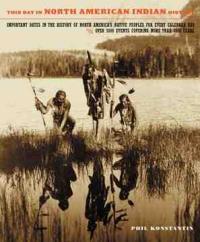
This Day in North American Indian History
This Day in North American Indian History is a one-of-a-kind, vastly
entertaining and informative book covering over 5000 years of North American Indian
history, culture, and lore. Wide-ranging, it covers over 4,000 important events
involving the native peoples of North America in a unique day-by-day format.
The thousands of entries in This Day in North American Indian History weave
a compelling and comprehensive mosaic of North American Indian history spanning more
than five millennia-every entry an exciting opening into the fascinating but little-
known history of American Indians.
Over 100 photographs and illustrations - This book has 480 pages, weighs 2.2 pounds and
is 8" by 9.5" in size. The Dates, Names and "Moons" section of these pages are based
on the book. |
This is the cover to my 4th book. Click here to got more info, or to order a copy or to get more info."
|
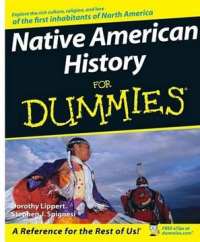
Native American History For Dummies
I wrote six of the twenty-four chapters in this book. I am credited with being the technical editor.
Book Description:
Native American History For Dummies introduces readers to the thousand-year-plus
history of the first inhabitants of North America and explains their influence on
the European settlement of the continent. Covering the history and customs of the
scores of tribes that once populated the land, this friendly guide features vivid
studies of the lives of such icons as Pocahontas, Sitting Bull, and Sacagawea;
discusses warfare and famous battles, offering new perspectives from both battle
lines; and includes new archaeological and forensic evidence, as well as oral
histories that show events from the perspective of these indigenous peoples. The
authors worked in concert with Native American authorities, institutions, and
historical experts to provide a wide range of insight and information.
|

This is the cover to my 3rd book. Click here to got more info, or to order a copy or to get more info
|
Treaties With American Indians I wrote an article and several appendix items for this book.
Clips from a review on Amazon.com: *Starred Review* In the 93 years from 1778 until 1871, there were
more than 400 treaties negotiated by Indian agents and government officials.
Editor Fixico and more than 150 contributors have crafted a three volume comprehensive tool that will
soon become essential for anyone interested in the topic.
A resource section with lists of ?Alternate Tribal Names and Spellings,? ?Tribal Name Meanings,?
(<---- I wrote this part) Treaties by Tribe,? and ?Common Treaty Names? and a bibliography and
comprehensive index are repeated in each volume. This
impressive set has a place in any academic library that supports a Native American studies or
American history curriculum. It is the most comprehensive source of information on Canadian-Indian treaties and
U.S.-Indian treaties. Also available as an e-book.
|

"The Wacky World of Laws"
It was just released in May 2009.
|
The Wacky World of Laws. Click on the cover to order a copy or to get more info.
The Wacky World of Laws is a compilation of U.S. and International Laws that are out of the ordinary.
With the U.S. churning out 500,000 new laws every year and 2 million regulations annually, this book
is the ideal go-to book fro everyone who wants a good laugh at the expense of our legal system. Law
so often can be boring! Now with The Wacky World of Laws, you can be the hit of any water cooler
conversation, and amaze your friends with precious legal nuggets.
I wrote most of this book. It is my fifth book.
|
(copyright, © Phil Konstantin, 2010)

Return to Previous Website

since September 4, 2005