October 2009 Newsletter from
"This Day in North American Indian History"
by Phil Konstantin
Copyright © Phil Konstantin (1996-2010)
Click Here To Return To The Previous Website
.
.
.
.
.
===============================================
Phil Konstantin's October 2009 Newsletter #1
===============================================

Greetings,

I found some interesting old (around 100 years old) books
online recently. I thought I would post a couple of the
articles I read. They are interesting to to see the perspective
of their authors.

There are some optical scanner problems with the second story....

Enjoy,

Phil


=========================
X+X+X+X+X+X+X+X+X+X+X+X+X
=========================

The Indians of to-day
By George Bird Grinnell
Published in 1911

CHAPTER II

INDIAN CHARACTER

The Indian has the mind of a child in the body of an adult. The struggle
for existence weeded out the weak and the sickly, the slow and the
stupid, and created a race physically perfect, and mentally fitted to
cope with the conditions which they were forced to meet, so long as they
were left to themselves. When, however, they encountered the white race,
equipped with the mental training and accumulated wisdom of some
thousands of years, they were compelled to face a new set of conditions.
The balance of nature, which had been well enough maintained so long as
nature ruled, was rudely disturbed when civilized man appeared on the
scene. His improved tools and implements gave him an enormous advantage
over the Indian, but this advantage counted for little in comparison
with the mental superiority of the civilized man over the savage.

People who have no knowledge of Indians imagine them to be merely
ignorant people, like uneducated individuals of the white race, and
compare them to the poorest of the Italian, Polish and Russian
immigrants to this country. They suppose that if the Indian were willing
to take a spade and shovel dirt, and to send his children to school, the
whole great problem of his progress would be solved at once and the race
would become a self-supporting part of the population of the United
States, able to hold its own in the competition which is becoming more
and more a feature of American life.

This is not the case. The Indian is not like the white man of any class
or condition; because his mind does not work like the mind of the adult
white man. The difference which exists in mental attitude does not imply
that the Indian is intellectually feeble, for when the young Indian is
separated from his tribe and is brought up in association with white
people, and so has an opportunity to have his mind trained to civilized
modes of thinking and to imbibe civilized ideas, he is found to be not
less intelligent than the average white. The difference in mind means
merely that the Indian, like every other human being, receives his
knowledge and his mental training from his surroundings. The boy, who is
brought up in the camp and associates constantly with his own race, sets
up for his standard of wisdom and learning the old and wise men of the
tribe who obtained their position of precedence in the old days of war
and hunting and who, of course, were born and reared in savagery. His
ideas thus take their tone from the old people whom he is taught should
be his examples, and will not be very different from theirs. He will
think as they think, and employ the same reasoning processes that they
do. There will be some slight advance in thought brought about by the
rapid changes of modern times, which must of necessity have some effect
on those who observe them, but as many of these changes are not at all
comprehended by the Indians, the advance will be slow.

I have said that the Indian's mind is that of a child, and by this I
mean that it is a mind in many respects unused, and absolutely without
training as regards all matters which have to do with civilized life.
The Indian is a close observer, and in respect to things with which he
is familiar—which are within the range of his common experience—he draws
conclusions that are entirely just—so accurate in fact as to astonish
the white man, who is here on unknown ground. But in matters which are
not connected with the ordinary happenings of his daily life he is
wholly unable to reason, because he has no knowledge on which reasoning
may be based.

Bearing in mind that the Indian in the last days of his free wandering
was undeveloped and not greatly changed from the grown-up child of
primitive times, let us consider what were some of his characteristics.

As his very existence depended on his procuring food, he was industrious
in seeking and securing it. As wealth was to be gained and fame acquired
by going on the warpath, he worked hard on his journeys to war, not only
undergoing the severest fatigues, but exposing himself to death at the
hands of his enemies. The woman's work was never done; household cares,
preparing clothing for the family and the labor of frequent movings kept
her busy most of the time.

In his own tribe and among his own people, he was honest, adhering
closely to the truth in conversation. About matters concerning which he
had no positive knowledge, he was always careful to qualify his
statements, so that it never might be said of him that his talk was not
straight, or that he had two tongues. Theft was unknown in an Indian
camp. There was nothing to steal, and if there had been, there was no
desire on the part of anyone to take it. This was a temptation to which
in his own home he was never exposed. If anyone found a piece of
property which appeared to have no owner, the finder communicated his
discovery to the camp crier, who shouted the news through the camp, so
that the owner of the lost article might know where to go to recover it.

Thus there were no dishonest people in an Indian camp. On the other
hand, there was never any doubt in the Indian's mind as to the propriety
of taking property from an enemy, and every stranger—that is to say,
everyone not a member of the tribe or not a distinct ally—was a
potential enemy. One of the most praiseworthy things that an Indian
could do was to capture from the foe possessions which they valued.
These were genuinely the spoils of war. Even when war was not in active
operation—as, for example, during a pretended peace—it was equally
creditable to spoil the enemy, provided it could be done without
detection and risk.

The tribal life pointed in the direction of community of property in the
wild creatures or the fruits of the earth, on which they subsisted and
which were to be had for the taking. Such common ownership, while
perhaps seldom expressed, was tacitly acknowledged with regard to food.

This in some degree explains the universal hospitality in an Indian
camp. Those who killed food did so not merely to supply their own wants,
but that the general public might eat. In certain tribes, those who did
the actual killing might have some special advantage, as the possession
of the skin or choice parts of the meat, but—except in times of great
scarcity—food was always to be had from a successful hunting party for
the asking. So among the tribes of the plains, if buffalo were driven
into the slaughter pen, all were at liberty to enter and supply their
wants. Among the tribes of the Northwest Coast, if a whale was killed,
or found cast up on the beach, it did not belong to those only who had
killed or found it, but all members of the tribe were free to help
themselves to what they needed. No matter how great the scarcity of food
might be, so long as there was any remaining in the lodge, the visitor
received his share without grudging. It might often be the case that
fathers and mothers would deprive themselves of food that their little
ones might eat, but if this was done it was a voluntary act on their
part, and did not lessen the supply to others in the lodge.

Another characteristic was fidelity to friends. The intimacies which so
frequently existed between two boys or two girls, perhaps first formed
when they were very small children, were likely to last through middle
life and even to old age, and were not interrupted except for some good
reason, as the incidents of marriage, the division of the village or
some other unavoidable cause. In case of need, such friends would
literally give their lives for one another.

The common belief that the Indian is stoical, stolid or sullen is
altogether erroneous. They are really a merry people, good-natured and
jocular, usually ready to laugh at an amusing incident or a joke, with a
simple mirth that reminds one of children.

The respect shown for one another in their assemblages is a noteworthy
characteristic. Such consideration for the rights of others is a natural
and necessary outgrowth of the development of any community. This
development not only taught the Indian consideration for his fellows,
but also selfcontrol in his dealings with them, so that in the camp
quarrels were extremely rare.

When, however, quarrels did occur, the parties to them were likely to be
difficult to control, for each would be as unreasonable as a child,
seeing only from his own point of view, and acknowledging no
justification on the part of the other. Such quarrels, however, were
usually one-sided, and sometimes resulted in a revenge which took the
form of the destruction of property, or very rarely in murder. Murder
was usually followed by either the death of the murderer, or his flight;
or at least by a total loss of influence, and social ostracism. I have
known of more than one case where a chief or principal man had killed a
member of his tribe, sometimes being obliged to do it in order to
protect his own life, or that of others; but in almost all instances the
man who thus had taken the life of one of his tribesmen has sunk from a
position of influence to a point where he was avoided by all the members
of the tribe.

The Indian, who went to war merely for the general purpose of
accumulating property or acquiring glory, wished to inflict on his enemy
as much harm as possible, without exposing himself to any special
danger. Yet the wish to do injury to an enemy was general rather than
specific, and in a particular case the warrior's heart was sometimes
open to pity, so that a victim might be spared instead of being killed,
or a captive enemy be furnished with a horse, provisions and arms, and
set free to return in safety to his tribe. On the other hand, if some
special injury had been done to a family, a village, or a tribe—if some
one had been killed or made captive—the friends and relatives of the
victim would do anything to satisfy their longing for revenge on the
offending tribe. If one of that tribe should be killed, they might cut
his body apart, and hanging the pieces on poles, dance about them in
triumph for weeks or months. If one of the enemy were taken alive, he
might be subjected to most cruel tortures.

Occasionally men made regular business of going to war, not for the
purpose of injuring the enemy, but merely to accumulate greater
possessions, just as with us in former times privateering was engaged in
for the actual profit to be derived from preying on the commerce of the
enemy. Parties on such expeditions sometimes took especial pains to
escape encounters with the enemy, and looked upon fighting as a risk and
trouble that was to be avoided if possible.

Big Foot, a Northern Cheyenne not long dead, was in his day a famous
warrior, and made a constant practice of going on the warpath to capture
horses, but though of undoubted bravery, he would never fight the enemy
if he could avoid it. An incident which exemplifies this is still told
of him in the tribe with much amusement. On one occasion a war party
which he was with charged a number of the enemy, who fled. Big Foot, who
was on a horse of great swiftness, observed that one of the enemy was
riding a beautiful horse which also seemed especially fast, and he was
seized with a great longing to possess it. After a long chase he
overtook the fugitive, but instead of trying to kill him, or knock him
out of the saddle, he threw his rope over his enemy's head, dragged him
from his seat, and then letting the man go, simply took the horse.

The Indian was brave, but fought in his own way. In his war journeys he
was subtle and crafty as the wolf or the panther, and for success
depended chiefly on discovering the presence of the enemy, and making
the attack before the enemy knew he was near. He modeled his warfare
after the plan of the other wild creatures among which he lived; as the
panther creeps up within springing distance of the unsuspecting deer, so
the Indian crawled through the grass, or the thicket, or the ravine,
until within striking distance of his unwitting enemy; and then making
himself as terrible as possible by yells and whoops, he fell upon the
victim before he could prepare any defense.

The Indian of old times would have regarded as a lunatic the warrior who
under the ordinary conditions of the warpath should permit his enemy to
become aware of his presence and should challenge him to combat on equal
terms. It is true that such duels sometimes took place, but they were
only between great warriors, and were usually in the presence of two
contending parties, by whom it had been agreed that the fate of the
battle should rest on a single champion. Under another set of
circumstances the warrior who for any reason no longer cared to live,
and wished to die a glorious death, sometimes set out on the warpath
with the avowed purpose of being killed. In such a case he would take
none of the usual precautions of war, but exposing himself without any
attempt at defense, would ride to death, endeavoring to show his bravery
and, before death came, to inflict as much injury as possible on the
enemy.

An example of conduct prompted by this feeling is shown in the Pawnee
story of Lone Chief,1 and also in the experience of the young Cheyenne
warrior Sun's Road, as he told it to me years ago. He said:

" It was long ago, when I was still unmarried, that I had had for a long
time a sore knee, badly swollen and painful. It had hurt and troubled me
for more than two years, and I thought that it would kill me. I said to
my father, ' Now pretty soon, I am going to die. When I die, do not put
me in the ground and cover me with earth. I want you to put me in a
lodge on a bed and leave me there.'

" My father said, ' My son, you must not die in that way. That will not
be good. Instead, I will fit you out properly, and you shall go to war,
and give your body to the enemy. Ride right in and count the first coup,
and let them kill you. Then you will die bravely and well.'

" Not long after this a war party was gotten up by Big Foot to go
against the Omahas, and I joined it. My father gave me his best horse;
it was the fastest one in the party. I was finely dressed and nicely
painted, and my hair was combed and smoothly braided so that I might
look well and die bravely.

1 Pawnee Hero Stories and Folk Tales, p. 51.

" When we got down toward the country of the Omahas, our scout one day
returned very soon, and told us that he had found the enemy close by.
Just beyond a nearby hill they were butchering, where they had made a
surround and killed buffalo. All our party started for the Omahas, but
when we came in sight of the place where they had been, we could see no
one. They had finished cutting up their meat and had gone. As we sat
there considering what we should do, one of the party looked off down a
little creek, and saw two men standing by their horses fixing their
loads of meat.

" We charged them. The two Omahas jumped on their horses, left their
meat and ran. I had the fastest horse of all the Cheyennes, and was
ahead of all the rest. I was intending to do as my father had told me.
As I rode, I saw that one of the Omahas had a flint-lock gun, and the
other a bow and arrows, and as I was coming up with them, I saw the one
who had the gun raise the pan cover and pour in some powder to make a
sure fire. Then he began to sing, and made signs to me to come on. I had
no gun, only a bow and arrows and a quirt.

" The two Omahas rode side by side and pretty close together, and I
thought that I would ride in between them, count coup on the one that
had the gun, and give them both a chance to kill me. I did not wish to
live. All the time I was catching up to them, and soon I ran right in
between them, and raised the whip stock to hit the one who had the gun.
Just as I was about to do this the Omaha twisted around on his horse,
and thrust the muzzle of the gun so close to me that it touched my war
shirt, and pulled the trigger. The gun snapped, and did not go off; and
as it snapped, I brought my whip handle down on his head, and almost
knocked him off his horse, but he caught the mane and recovered. The
other man, on my left, shot with his bow over his right shoulder, and
the arrow went close to my ear; I could hear it. Then I rode on by them,
and the rest of the party came up and killed them both.

" At the Omaha camp they heard the shooting when these two were killed,
and many of the Omahas came out, and we had a big fight. We killed one
more Omaha. Then we went home.

" When we got home to the main village, and what we had done had been
told, my father was glad. He was so glad that he gave away all the
horses he owned. He said to me, ' My son, you have been to war and given
your body to the enemy, and you have lived. Now, my son, you will live
to be an old man. You will never be killed.' Then my father went out,
and walked about through the village and prayed, calling out and saying,
to He ammawihio:1

"' I gave you my son, but you took pity on me and sent him back to me
alive to live on the earth, and now he shall live a long life.'

" Then he shouted out and called different people to him, and gave away
his horses, one after another, giving one to each person, and telling
each one the story of what I had done."

The Indian, being a natural soldier, quickly learned, during his wars
with the white troops, that there was sometimes much advantage in
fighting in the white man's way, and when this lesson had been learned,
he practiced it with such good effect as to impress upon the white enemy
whom he met in battle, a wholesome respect for his courage.

1 He anuna-wihio, the principal god of the Cheyennes; probably,
intelligence on high.

=========================
X+X+X+X+X+X+X+X+X+X+X+X+X
=========================

THE AMERICAN ASSOCIATION ADVANCEMENT OF SCIENCE FOR THE FORTY-FOURTH
MEETING HELD AT SPRINGFIELD, MASS. AUGUST-SEPTEMBER, 1895.

SALEM : PUBLISHED BY THE PERMANENT SECRETARY.
May, 1896.


??? SACRED POLE OF THE OMAHA TRIBE. By ALICE C.
FLETCHER.

Peabody Museum, Cambridge, Mass.

In the Peabody Museum of Harvard University have been placed, for safe
keeping, the contents of two of the sacred tents of the Omaha trite of
Indians. The Sacred Pole and its pack were deposited in 1888, while the
articles pertaining to the sacred tent of war were transmitted four
years earlier, in 1884. These relics are unique and of rare ethnological
value, and the relinquishing of them by their keepers is, I think,
without historic parallel. It came about In this way. When the changes
incident to the Impinging of civilization upon the Omahas made it
evident to their leading men that ancient tribal observances were no
longer possible, the question arose as to what should be done with the
sacred objects that for generations had been essential in their
ceremonies, and expressive of the authority of those charged with the
administration of tribal affairs. To destroy these sacred articles was
not to be thought of, and it was suggested that they should be buried
with the chiefs of the gens charged with their keeping; manner of
disposal was finally determined upon.

At that time, I was engaged in a serious study of the tribe, and to me,
it seemed a grave misfortune that these venerable objects should be
suffered to decay, and the full story of the tribe be forever lost, for
that story was as yet but imperfectly known; and, until these sacred
articles, so carefully hidden, could be examined, it was impossible to
gain an inside point of view whence one could study, as from the centre,
the ceremonies connected with these articles and their relation to the
autonomy of the tribe. The importance of securing these objects became
more and more apparent, and influences were brought to bear upon the
chiefs who were their keepers to prevent the carrying out of the plan
for burial.

After years of labor, wherein large credit must be given to the lat«
Joseph La Flesche, former head chief of the tribe, and to his son, the
sacred articles were finally deposited in the Peabody Museum of Harvard
University. The transfer was not effected without dramatic incidents
evidencing the awe in which these objects were held—objects which, in
their unpretending appearance, give little idea of the Important part
they have played in the history of more than one Indian tribe of our
country.

The Omaha tribe is composed of ten Tön-wöB-gdhön or villages, to which
for convenience sake we apply the term gentes ; these camped In a fixed
place, in n circular form, known as the Hu-dhu-ga, which had its opening
to the east; five gentes camped along the line of the northern half and
five along the southern half. When the tribe left their villages to go
ouï upon the annual buffalo hunt, at which time they often travelled
several hundred miles, the opening; of the Hu-dhu-ga was always in the
direction in which the tribe was moving ; but the idea of orientation
was never lost, for, if the people were going westward, the
horseshoe-shaped Hndhu-ga turned as on a hinge placed opposite the
opening, and the northern half, when the opening faced the east, was
still the northern half, now that the opening faced the west. In the
mind of the people, the Hu-dhuga always opened to the east, and the
tribe ideally faced the rising sun, wherever they pitched their tents.

The northern half of the Hu-dhu-ga was called In-shta-sunda, taking the
name of the gens that camped at the northern point of the opening. The
southern half was known as the Hon ga-she-nu, from the Hönga gens which
occupied the middle place among the five gentes forming the south half.
All the tents faced or opened toward the space enclosed by the line of
lodges forming the Hu-dhn-ga.

There were three tents set apart to contain the sacred objects of the
tribe, known as the Dte-waghu-be, or sacred tents. One of these
contained the paraphernalia of the ceremonies connected with war. This
tent was pitched a short distance in front of those of the Ve-jin-shte
gens, its keeper. This gens camped at the southern end of the opening,
opposite the In-shta-sunda gens. The other two sacred tents were set
side by side in front of the Hönga gens, who had them in charge. The
tent toward the west held the Hide of the White Buffalo Cow, and the
tent cover was decorated upon the outside with stalks of corn in full
ear In the tent towards the east were deposited the Sacred Pole and its
belongings, and the decoration on the cover of the lodge was a number of
round red spots.

These tents were objects of fear ; no one unbidden went near them or
touched them, and should any person or any animal or a tent pole come
accidentally in contact with any of the three tents, the offending thing
must be brought to the keeper, who would wash it with warm water, and
brush it with a spray of artemisia, to prevent the evil that was
believed to follow such profanation.

The Sacred Pole is of cotton-wood 2 m. 50 cm. in length and bears marks
of great age. It has been subjected to manipulation; the bark has been
removed, and the pole shaved and shaped at both ends, the top or " head
" rounded into a cone-shaped knob and the lower end trimmed to a dull
point. Its circumference near the bead is 15 cm. 2 mm. ; the middle part
increases to 19 cm. and is diminished toward the foot to 14 cm. 6mm. To
the lower end is fastened, by strips of tanned hide, a piece of harder
wood, probably ash, 55 cm. 2e mm. in length, rounded at the top with a
groove cut to prevent the straps slipping, find with the lower end
sharpened so as to be easily driven into the ground. There is a crack in
the Sacred Pole extending several cm. above this foot piece, which has
probably given rise to a modern idea that this foot piece was added to
strengthen or mend the pole when it had become worn with long usage. But
the pole itself shows no indication of ever having been in the ground ;
there is no decay apparent, as is shown on the foot piece whose
flattened top proves that it was driven into the ground. Moreover the
name of this piece of wood is Zhi-be, leg, and as the pole itself
represents a man and as this name Zhi-be is not applied to a piece of
wood spliced on to a lengthened pole, it is probable that a foot piece
was originally attached to the pole.

Upon this Zhi-be or leg, the pole rested; it was never placed upright,
but inclined forward at an angle of about forty-five degrees and was
held firmly In place by a stick, tied to it about 1 m. 46 cm. from the
"head." The native name of this support is I-mofi-gdhe, a staff such as
old men lean upon.

Upon the top or " head " of the pole was tied a large scalp, ni-ka
nonzhi-ha. About one end, 14 cm. 5 mm. from the " head " of the pole, is
& piece of hide bound to the pole by bauds of tanned skin. This wrapping
covers a basket work of twigs and feathers lightly filled with the down
of the crane. The length of this bundle of hide is 44 cm. 5 mm. and its
circumference about 50 cm. But this does not give an exact Idea of the
size of this basket work when it was opened for the ceremony, as the
covering has shriveled with age, it being twenty years this summer since
the last ceremony was performed and the wrapping put on as it remains
to-day.

This bundle is said to represent the body of a man. The name by which it
is known. A-khon-da bpa, is the word used to designate the leather
shield worn upon the wrist of an Indian to protect it from the
bow-string. This name affords unmistakable evidence that the pole was
intended to symbolize a man, as no other creature could wear the
bow-string shield. It also indicated that the man thus symbolized was
one who was both a provider and a protector of his people.

The accompanying pack contained' a number of articles which were used in
the ceremonies of the Sacred Pole. This pack is an oblong piece of
buffalo hide which, when wrapped around its contents, makes a round
bundle about 80 cm. long and 60 cm. in circumference. It was bound
together by bands of raw hide and was called Wa-dhi-gha-be. meaning
literally, things flayed, referring to the scalps stored within the
pack. Nine scalps were found in it when I opened the pack at the Museum,
and some of them show signs of considerable wear; they are all very
large and on one are the remains of a feather, all of which has been
worn away but the quill.

The pipe belonging to the pole and used in its rites was kept in this
pack. The stem is round and 89 cm. in length. It is probably of ash, and
shows marks of long usage. The bowl is of red catlinite, 12 cm. 5 mm. at
its greatest length and 7 cm. 2 mm. in height. The bowl proper rises 4
cm. 5 mm. from the base. Upon the sides and bottom of the stone certain
figures are incised which are difficult to determine; they maybe a
conventionalized bird grasping the pipe. The lines of the figures are
filled with a semi-lustrous black substance composed of vegetable matter
which brings the design into full relief; this black substance is also
painted upon the front and back of the bowl, leaving a band of red
showing at the sides. The effect Is of a black and red inlaid pipe. When
this pipe was smoked the stone end rested on the ground ; It was not
lifted but dragged by the stem as it passed from man to man while they
sat in the sacred tent or enclosure. To prevent the bowl falling off,
which would be a disaster, a hole was drilled through a little flange at
the end of the stone pipe where it is fitted to the wooden stem, and
through this hole one end of a cord made of sinew was passed and
fastened, and the other end of the cord securely tied about the pipe
stem 13 cm. above its entrance into the stone pipe bowl.

The stick used to clean this pipe, Ni-niu-dhu-ba-thki, was kept in a
case or sheath of reed wound round with a fine rope of human hair, which
was fastened with bits of fine sinew; a feather, said to be that of the
crane, was bound to the lower end of this sheath. Only a part of the
quill remains. Sweet grass, Pe-zthe-zthon-thta, and cedar, ma-zthi,
broken up and tied in bundles, were in the pack. Bits of the grass and
cedar were spread upon the top of the tobacco when the pipe was filled,
so that when it was lit these were first consumed, making an offering of
savory smoke.

Seven arrows, Monpe-dhum-ba, were in the pack. The arrow shafts are much
broken; they were originally 45 cm. 6 mm. in length, feathered from the
crane, and had stone heads. Part of the quills of tne feathers remain,
but the arrow heads are lost. A bundle of sinew cord, red paint
Wa-tlie-zhi-de, used in painting the pole, and a carious brush, complete
the contents of the pack. The brush is made of a piece of hide, one edge
cut into a coarse fringe and the hide then rolled together and bound
with bands, making a rude utensil with which the paint, mixed with
buffalo fat, was put upon the pole.

Those who may visit the Peabody Museum at Harvard University will notice
upon the upper portion of the Sacred Pole something that looks like
pieces of thick bark; it is the dried paint that remains from the
numerous anointing of the pole, which ceremony was a thank offering for
successful hunts and a prayer for future prosperity. The anointing or
painting of the pole took place in July toward the close of the annual
buffalo hunt after the tribe had reached that portion of their hunting
grounds where they felt themselves reasonably secure from their enemies.
The custom long ago, beyond the memory of the oldest man, so I was told
by the chief of the Hönga in 1888, was to perform this ceremony twice a
year after the summer and winter hunt, but, within his memory and that
of his father, it had been held only in the summer.

The rapid destruction of the herds of buffalo in the decade following
1870 caused the Indian not only sore physical discomfort, but also great
mental distress. His religious ceremonies needed the buffalo for their
observance, and its disappearance, which In its suddenness seemed to him
supernatural, has done much to demoralize the Indian, morally as well as
socially. No one can have his sacred rites overturned in a day and
preserve his mental equipoise.

After several unsuccessful hunts of the tribe, poverty succeeded to
their former plenty, and, in distress of mind and body, seeing no other
way of relief, the people were urged to try performance of their
ceremony of Anointing the Pole, although misfortune in hunting had made
this In Its integrity impossible. A new plan was suggested by which the
ceremony could be accomplished and, as they fondly hoped, the blessing
of plenty be restored to the people. The tribe had certain moneys due
from the U. S. in payment for ceded lands, and through their agent they
asked that such a sum as was needful to purchase thirty head of cattle
should be paid them. The agent, little understanding the trouble of mind
of the Indians under his charge or the motive of their request, wrote to
the Interior Department of Washington, that " The Omahas have a
tradition that when they do not go on the Buffalo Hunt, they should at
least once a year take the lives of some cuttle and make a feast." This
interpretation of the Indian's desire of spending his own money for the
purchase of the means by which he hoped to perform rites that might
bring back the buffalo and save him from an unknown and terrifying
future, is a significant comment on how little the Indian's real life
had been comprehended by those appointed to lead him along new lines of
living and thinking. The cattle were bought at a cost of about $1000.
The ceremony took place; but alas ! the conditions did not alter. A
second time the tribe spent its money, but to no avail. New interests
and influences grew stronger every month. The old customs could not be
made to bend to the new ways forced upon the people. Opposition to
further outlay arose from the government and amongst some of the people;
and one year, two years, three years passed and the Pole stood silent in
its tent, dreaded, as a thing that was powerful for harm, but seemingly
powerless to bring back the old time prosperity to the people.

When, in 1888, the Pole was finally placed for safe keeping in the
Museum at Harvard University, it seemed very important to secure its
legend, known to the chief of the Hönga. The fear inspired by the Pole
was such that it seemed as though it would be impossible to gain this
desired information, but it was finally brought about; and one summer
day in September, the chief, Shu-de-na-zhe, came to the house of Joseph
Le Flesche, to tell the tradition of his people treasured with the
legend of the Pole.

It was a memorable day ; the harvest was ended and tall stacks of wheat
cast their shadows over the stubble fields that were once covered with
buffalo grass. The past was irrevocably gone. The old man had consented
to speak but not without misgivings, until his former head chief
cheerfully accepted for himself any penalty that might follow the
revealing of these sacred traditions, which was held to be a profanation
punishable by supernatural means.

While the old chief talked he continually tapped the floor with a little
stick he held in his hand, marking with it the rhythm peculiar to the
drumming of a man who is invoking the unseen powers, during the
performance of certain rites. His eyes were cast down, his speech was
deliberate, and his voice low, as if speaking to himself alone. The
scene in that little room where we four sat was solemn, as at the
obsequies of a past once so full of human activity and hope. The fear
inspired by the Pole was strengthened in its very passing away. By a
singular coincidence the touch of fatal disease fell upon Joseph La
Flesche almost at the close of this interview, which lasted three days,
and in a fortnight he lay dead in the very room where had been revealed
the legend of the Pole.

According to the legend, the appointed time for the ceremony of
Anointing the Pole was in the moon, or month, when the buffalo bellow,
the latter part of July. It was to follow the fourth tribal chase after
the ceremony of the taking of twenty buffalo tongues and one heart had
been performed four times. Then the Wa-ghdhe-ghe-ton subdivision of the
Hönga gens, which had charge of the Pole, called the seven principal
chiefs, who formed the oligarchy, to the sacred tent to transact the
preliminary business. They sat there with the tent closed tight, clad in
their buffalo robes, worn ceremonially, the hair outside and the head
falling on the left arm; they smoked the pipe belonging to the Pole, and
ate the food provided, in a crouching attitude, and without a knife or
spoon, in imitation of the buffalo's feeding, and took
???? not to drop any of the food. Should,
however, a morsel fall upon the ground, it was carefully pushed toward
the fire; such a morsel was believed to be desired by the Pole and, as
the legend says, " no one must take anything claimed by the Pole."

When the council had agreed upon the day for the ceremony, runners were
sent out to search for a herd of buffalo, and, if one was found within
four days, it was accounted a sacred herd, and the chase that took place
provided fresh meat for the coming ceremony. If, however, within four
days, the runners failed to discover a herd, dried meat preserved from
their previous hunts was used.

In this preliminary council, each chief, as he took a reed from a bundle
kept in the sacred tent, mentioned the name of a man of valorous
exploits. When the number of brave men agreed upon had been mentioned,
the Hönga gave the reeds to the tribal herald to distribute to the
designated men, who, on receiving them, proceeded to the Sacred Tent,
and by giving back to the Hönga their reeds, accepted the distinction
conferred upon them. It was now their duty to visit the lodges of the
tribe and select from each tent a pole to be used in the construction of
a lodge for the ceremonies. This they did by entering the tent and
striking the chosen pole, while they recounted the valiant deeds of
their past life. These men were followed by designated men from the
Hönga gens, with their wives, who withdrew the selected poles and
carried them to the vicinity of the sacred tent, where they were set up
and covered so as to form a semicircular lodge. It was erected upon the
site of the Sacred Tent, which was incorporated in it, and opened toward
the centre of the tribal circle; and, as the poles taken from all the
tents in the tribe were used in its construction, this communal lodge
represented the homes of the people.

Up to this time the tribe may have been moving and camping every day,
but now a halt is called until the close of the ceremony. To the
communal tent the seven chiefs and the headmen are summoned by the Hönga
and take their seats, all wearing the buffalo robe in the ceremonial
manner. The herald on this occasion wears a band of matted buffalo-wool
about his head with a downy eagle feather standing in it.

The Sacred Pole is brought forward to the edge of the communal lodge so
as to lean out toward the centre of the Hu-dhu-ga. In front of It a
circle is cut in the ground, the sod removed, and the earth made loose
and fine.

From this time to the close of the rites, all the horses must be kept
outside the Hu-dhu-ga, and the people must not loiter in or pass across
the enclosure. To enforce this regulation, two men were stationed as
guards at the entrance of the tribal circle.

The pipe belonging to the Sacred Pole is smoked by the occupants of the
communal tent, and the bundle of reeds brought. Each chief, as he draws
the reed, mentions the name of a man, who must be one who live* in his
own lodge as the head of a family, and not a dependent upon relatives
(what we would term a householder). As the chief speaks the name, the
herald advances to the Pole and shouts it aloud so as to be heard by the
whole tribe. Should the name given be that of a chief, the herald will
substitute that of one of his young sons. The man called is expected to
send by the hand of his children the finest and fattest piece of the
buffalo meat, of a peculiar cut known as the te-zhu. If the meat is too
heavy for the children, the parents help to carry it to the communal
tent. The little ones are full of dread, and particularly fear the fat
which is to be used upon the Pole. So, as they trudge along, every now
and then they stop to wipe their wee fingers on the grass so as to
escape any blame or possible guilt of sacrilege.

Should any one refuse to make this offering to the Pole, he would be
struck by lightning, be wounded in battle, or lose a limb by a splinter
running into his foot.

The gathering of the meat occupies three days, during which the songs
are singing at intervals, by day and night, the sacred songs, which echo
through the camp and enter into the dreams of the children.

The songs belonging to the ritual of the corn are first sung, followed
by those relating to the hunt, all in their proper sequence. If a
mistake in the order is made, the Hönga lift up their hands and weep
aloud, until the herald, advancing from the Sacred Pole, wipes away the
tears with his hands and the wail causes, and the songs go on.

On the morning of the fourth day the meat is spread upon the ground
before the Pole in parallel rows, the full length of the communal lodge.
The keeper of the Pole and his wife then advance to perform their part
in the ceremony. He is clot lied in the usual shirt and leggings and his
cheeks are painted in red bands. The woman wears over her gala dress a
buffalo robe with the skin outside which is painted red; so are her
cheeks, and bands of the same color are on her glossy, black hair, and
to the heel of each of her moccasins is attached a strip of buffalo
hair, like a tail.

Songs precede and describe every act of the keeper. When he is about to
cut the fat from the meat offered to the Pole the Hönga sings the Song
of the Knife, and, at the fourth repeat, the keeper grasps the knife.
So, on the fourth repeat of another song, he cuts off the fat. and lays
it in » large wooden howl which is carried by his wife. In this vessel
the soft fut and a peculiar clay made red by baking are kneaded into a
paint, with which the keeper smears the pole.

In the circle excavated in front of the Pole, a buffalo chip is kindled
and sweet-grass and cedar leaves laid upon it, through the smoke of
which the seven arrows are now passed for purification and consecration.
The leather covering is removed from the body of the Pole, and the woman
comes forward and thrusts the seven arrows, one by one, through the
basket-work thus exposed. Each arrow has its special song. If an arrow
passes clean through, and falls so as to stand in the ground, all the
people shout for joy, as this indicates special victory in the war and
success in hunting.

Now, the buffalo meat is gathered up and laid away, and four images are
made of grass and hair and set up before the Pole. These are to
represent enemies of the tribe. Then the herald goes forth shouting : "
Pity me, my young men, and let me once more complete my ceremonies ¡"
meaning by this that the men of the tribe should lay aside all other
affairs and considerations and devote themselves to the part they were
to play in the final act of the ceremony.

While the warriors are putting on their ornaments and their eagle
feather war-bonnets, and getting their weapons in order for a simulated
battle before the Pole where they should act out in detail their past
brave deeds of war, the people crowd together at either end of the
communal tent as to a vantage point whence to view the dramatic
spectacle.

Some of the warriors appear on horseback outside the camp and charge
upon it, crying out, "They have come! They have come!" (This was once
done in so realistic a manner as to deceive the people into the belief
of an actual onslaught of an enemy, to the temporary confusion of the
whole tribe.) The warriors fire upon the images before the Pole, and the
chiefs within the communal tent shoot back in defense of them; this
charge is made four times and then the images are captured and treated
as conquered. With this stirring drama, which is called " Shooting the
Wa-ghdhe-ghe," or Pole, the ceremonies come to an end, which ceremonies,
according to the legend, were instituted " to hold the people together."

On the following day the Hc-di-wa-chi, ander the leadership of the
Inke-tha-be gens, takes place. This is participated in by all the tribe,
men, women and children. The He-di-wa-chi is a dance about a pole, which
has been cut and painted for the occasion with peculiar ceremonies.
After this dance the camp breaks up, each family following its own
pleasure, and all rules and regular times as to hunting end for the
season.

The legend states that the Unting of the Pole occurred while a council
was in progress among the Cheyennes, Arickerees, Pawnees, and the
Omahas, which then included what are now the Ponka and Iowa tribes. The
object of the council was to agree upon terms of peace and decide upon
rules of war and hunting.

The legend runs as follows : " During this time a young man who had been
wandering came back and said : ' Father, I have seen a wonderful tree!'
and he described it. The old man kept silent, for all was not yet
settled between the tribes.

The young man went again to visit the tree, and on his return repeated
to his father his former tale of what he had seen. The old man kept
silent, for the chiefs were still conferring.

At last when everything was agreed upon between the tribes, the old man
sent for the chiefs and said :

"My son has seen a wonderful tree. The thunder birds come and »o upon
this tree, making a trail of fire that leaves four paths of burnt grass
toward the four winds. As the thunder birds light upon the tree, it
bursts into flame and the fire mounts to the top ; still the tree stands
burning, but no one can see the fire except at night."

When the chiefs heard this tale, they sent runners to see what it might
be, and the runners came back and told the same story,—how the tree
stood burning in the night. Then all the people had a council, and the?
agreed to run a race for the tree and attack it as if it were an enemy.
The chiefs said : " We shall run for it ; put on your ornaments and
prepare as for battle."

So the young men stripped and painted themselves, and put on their
ornaments, and set out for the tree, which stood near a lake. The men
ran and a Ponka reached it first and struck it, as he would an enemy.

Then they cut the tree down and four men, walking in line, carried it on
their shoulders to the village. And the people sang four nights, the
songs which had been composed for the tree, while they held their
council. The tree was taken inside the circle of lodges and a tent was
made for it. The chiefs worked upon the tree, and shaped it and called
it a human being. They made a basket-work of twigs and feathers, and
tied It on the middle of the pole for a body. Then they said : " It has
no hair !" So they sent out to get a large scalp, and they put it on the
top of the pole for hair. They sent out a herald to tell the people that
when all was completed they should see the pole.

Then they painted the pole and set it up before the tent, leaning on a
staff, and called all the people; and all the people came,—men, women
and children. When all the people had gathered, the chief stood up and
said: "You now see before you a mystery. When we are in trouble we shall
bring our trouble to him. To him you shall make your offerings and
requests; all your prayers must be accompanied by gifts. This (pole)
belongs to all the people, but it shall be in the keeping of one family,
and the leadership be with them, and if anyone desires to lead (i. e.
become a chief and take responsibility in the governing of the people),
he shall make presents to the keepers, and they shall give him
authority."

When all was finished, the people said, " Let us appoint a lime when we
shall again paint him, and act before him the battles which we have
fought." So the time was fixed in the moon when the buffaloes bellow.

Then follow the details of the ceremony already outlined, ending with
the words : " This was the beginning of the ceremony, and it was agreed
that it should be kept up."

The legend goes on : " The people began to pray to the Pole for courage
and for trophies in war, and their prayers were answered. The Pole is
connected with thunder and war, the authority of the chiefs and of the
hunt."

At the time when the Pole was discovered, both the tradition of the
Omahas and the Ponkas concur in stating that the people were living In a
village near a lake, and that the tree, which was evidently some
distance from the camp, grew near a lake. The exact position of this
village is not yet identified, but it was in all probability at no great
distance from the lied Pipe stone quarry in the southwestern part of
South Dakota.

Time forbids an enumeration of my historical researches in this
connection, but the oldest records and authentic maps indicate that the
Pole could not have been cut at any time since 1678.

The establishment of the order of chieftainship and the government of
the tribe, as it has been known during the present century, antedated
the institution of the pole. Several political changes had already taken
place before that event.

I cannot at this time recount and analyze the Legend of the Seven Old
Men, who are said to have instituted the government by seven chiefs, and
to have established the Ni-ni-ba-ton or pipe subgens in certain of the
ten gentes of the tribe. This legend deals with a political change and a
religious innovation that long antedated the advent of the Sacred Pole.
When the seven old men introduced the sacred tribal pipes, there were
already in the tribe three distinct groups of insignia of as many forms
of worship, namely :

The four sacred stones, in the custody of the
??-thiñ-ga-ge-he gens, having their peculiar ritual.

The Honor Pack, the Sacred Shell and the Pole of Red Cedar, of the
Thunder Rites, In charge of the We-jin-shte gens; and

The songs and ritual of the Hede-wache, committed to the Inkethabe gens.

The entrance of the Omahas into the group of tribes that agreed to
respect and to observe the ceremony of the Wa-wan—Pipes or Calumets of
Fellowship— not only tempered their sun worship through the teachings of
the ritual of this ceremony, but opened a new path to tribal honor, by
which a man of valor and industry could reach equality with the
hereditary chiefs in the government of the tribe. The sacred ritual
pipes had the same function within the tribe, as the Wa-wan or Calumets
of Fellowship had between different tribes, and they also were
ornamented with the peculiar woodpecker heads, the upper mandril turned
back and painted in the same manner as upon the Fellowship Calumets.
Upon one of these tribal pipes seven of these heads were placed in
? ????, referring to the seven chiefs; on
the other pipe there was but one head, symbolizing the uni*- of
authority which must be reached by unanimity of the sever, chiefs in all
decisions.

Poles had long been used in the tribe as symbols of religions beliefs
and of authority.

The He-di-wa-chi and its pole bear evidence of great age, and it seems
not improbable that it sprang from the same root as the Sun Dance of the
Dakotas which has developed so differently.

The Pole of the Thunder rites, belonging to the Sacred Tent of War, in
the care of the We-jin-shte gens, was of red cedar, 1 m. 25 cm. in
length, to which was corded a Zhi-be or leg, 61 cm. long. A rounded
stick like a club 43 cm. long, also of red cedar, was bound about the
middle of the pole. The Thunder gods used clubs as weapons ; one of the
ritual songs of the Tent of War says : " Your grandfather, fearful to
behold is he! When your grandfather lifts his long club, he is fearful
to behold !" In olden time, when the rites were performed in the spring
when the first thunder peal was heard, a part of the ceremony was the
painting of this pole.

It is probable that this pole was the prototype of the Sacred Pole: the
two have features in common: the Zhi-be or leg; the body on the one
being the thunder club, and on the other bearing the name of the bow
shield, used by warriors to protect the wrist from the bow-string; both
poles were painted with due ceremony at appointed times; both referred
more or less directly to thunder, and any profanation of either was
avenged by that power, the guilty being struck by lightning. It will be
recalled that attention was first drawn to the tree, from which the
Sacred Pole was shaped, by the thunder birds coming to it from the four
quarters and the mysterious burning that followed; so that the pole
became, in the minds of the people, endowed with supernatural power by
the ancient thunder gods.

The government by the seven chiefs was at first confined to hereditary
rulers, drawn from certain subdivisions of certain gentes. By a slow
process in the course of time men of ability rose into power, and honors
were won and worn by those whom the people recognized as leaders, until,
at last, the oligarchy of seven.became representative of individual
attainment, and of gentes and sub-gentes hitherto debarred from
participation in the governmental affairs of the tribe.

The name given to the Sacred Pole, Wa-ghdhe-ghe, bears testimony to this
political change in the chieftainship. Wa-ghde-ghe is made up of the
prefix wa-, indicating the power to do, and ghdhe-ghe, the name of the
ceremony of placing the mark of honor upon the daughter of a chief.
(This consisted in tattooing a small round spot about half an inch in
diameter upon the forehead, and, upon the chest and back, just below the
neck, a circle with four equidistant points projecting from it. These
symbol« refer to the sun and the four quarters.) The right to put the
mark of honor upon a daughter was not hereditary, but could be gained
through the performance of one hundred certain deeds, called
Wa-dhin-e-dhe. The name of the pole, Wa-ghdhe-ghe, signifies the power
to do, or perform this ceremony, ghdhe-ghe, the mark of honor.

The Sacred Pole of the Omahas was, as we have seen, scarcely an
innovation as a symbol, although it stood for the authority of new ideas
that had been slowly developing within the tribe. In it and its
ceremonies nothing that had been gained in the past was lost, the
supernatural control of man was recognized, together with his ability to
achieve for himself honor and rank. It stands as a witness that society,
even In its primitive tribal conditions, is not an inert mass of people,
but an organization operated upon by laws kindred to those which we have
learned to recognize as instrumental in the unfolding of the mind of
man.

Indian Songs And Ml-sic. By Alick C. Fi.ktchkb, Peabody Museum,
Cambridge, Mass.

It is well known to those familiar with our North American Indians that
every important act and every ceremony has its appropriate music;
rituals are embedded in it ; warriors are stimulated by it ; youth and
old age seek expression through it ; so that a collection of the songs
of a tribe exemplifies the emotional life of the people.

It has been suggested that these songs were generally improvised, and
that one seldom hears a song rendered twice alike; but, from extended
observation covering many years and many tribes, I am convinced that the
supposition is a mistake. The songs of a tribe are handed down with
care, and the rituals are taught to those entitled to initiation, or who
have the hereditary right to learn them. The various societies have
their special songs, which are transmitted by official keepers who are
always men possessing musical gifts who take pride in their exactness of
memory. The same is true of game songs and of others that relate to
social customs. I have found it a rule among Indians that no one will
venture to sing a song in the presence of other Indians if he is not
sure that he can render it correctly, for a mistake subjects him to
unmerciful ridicule. Of course sougs which are sacred, or are private
property, are never heard in public.

Many of the songs I have transcribed are undoubtedly very old. It is
probable that the Omaha prayer, or " Cry to Wa-koti-da," echoed through
this broad land, when its hills and woods were indeed a terra-incognito
to our race. While there are many songs preserved, because of their
connection with rituals and sacred rites, or because of their power of
expressing emotion, these old songs are not the only ones to be heard,
for the art of song making is not yet lost. A good, new song finds its
way among the Indians almost as rapidly as with us, and, when men visit
from one tribe to another, one of the pleasures of home-coming is to be
able to bring back a new song. Songs, therefore, travel far, but it is
always remembered where the song started, and credit is given to the
tribe where it originated.

The difficulties that attend the collecting of Indian songs are many,
and I am indebted for much of my success in the pursuit of this study to
my collaborator, Mr. Francis La Flesche. While some ceremonies are quite
free to the public, and the music easily obtained, there are others to
which it is almost impossible to gain entrance and their ritual is kept
a secret. Songs that pertain to individual experience are seldom heard ;
for it is not easy to gain the confidence of the Indian or to get near
enough to the people to observe them without restraint.

It has been asserted upon good authority that there are no love songs
among the Indian tribes. Songs, as Herbert Spencer defines them,
"commenced by a man to charm a woman." The statement is a mistake, but
it is one easily made, for a person could live years in a tribe and
never a chance to hear one such song, as Indians are particularly shy
concerning all such matters.

There is, however, a class of songs which celebrate so-called love
adventures. These are sung exclusively by men mid never in the presence
of women. But although women never hear these songs and seldom know of
their existence, strangely enough the gallant who composes the words
makes the woman appear to be the narrator of the story. These derisive
songs are familiar to white observers, and have given rise to the
opinion that they are the only love songs among the Indians. The fact
is, that these "Woman-songs," as the Omahas call them, are not in any
sense love or courtship songs.

To record Indian songs from memory is very difficult, and the task of
securing frequent repetitions of songs is often one requiring much
diplomacy. Gramophonic records are exceedingly helpful, but they require
verification by the human ear. I have found it quite important in taking
records, both by the ear and by the gramophone, to secure a number of
singers, so that a volume of sound should be produced ; this is
particularly necessary when testing the accuracy of the notation of a
song.

In the monograph entitled, A Study of Omaha Indian Music, published by
the Peabody Museum of American Archaeology and Ethnology, of Harvard
University, Cambridge, Mass., I have spoken in detail of the Indian's
mode of singing, of the absence of a standard pitch, and of other
characteristics. I will at this time refer only to their marked rhythm.
Many Indian songs are accompanied by movements of the body, so that the
eye as well as the ear is arrested by the strongly accentuated rhythm.
Upon closer observation, the songs show something more than a feeling
for rhythm; they reveal a time-sense or metrical sense. As this is an
important point, permit me, at the risk of being a little technical, to
call your attention to the distinction between rhythm and time-sense,
or, as the Germans denote the latter, " Takt." " There is rhythm in
nearly all the continuous natural sounds we hear," says Dr. Richard
Wallaschek, who has written very clearly on this point; but when, for
instance, we are listening to regular beats, we divide those beats in
our mind according to the attitude of our observation. We group them
into twos or threes, lengthen or shorten the periods or " bars." This
time- or metrical-sense, this power of group perception, is not, as the
psychologists tell us, ' ? sensation proper, as hearing, seeing,
etc., but a mental work of grouping the sensations; and this takes place
not in the senses themselves, but in the cortex." Dr. Wallaschek refers
the origin of music to this time-sense; because, out of this sense, has
been evolved the choral, or chorus,—"the germ," as he says, " which has
alone been capable of enormous development in music." . . . "if two or
several people sing together, then song is something more than merely
ihc outcome of feeling, for they have to keep their performance in
accordance with each other; and to accomplish this they have to observe,
to group, to arrange the tones." ..." They could not keep together if
they did not mark periods (groups), for there is no concert possible
without bars. What they perform is rhythm. What they think is 'Takt.'"
He adds, "the bird's song has rhythm, but the bird has no'Takt'." . . .
"Music requires a degree of observation, an intention, and a
participation of the intellect, and not only a momentary vocal reflex of
feeling; it requires the form of time-ordered perception, which Is
lacking in the animal, and so strongly pronounced in the choral, dance
music of primitive men. . . . singing in concert requires a definite
purpose, a definite arrangement of utterances, which are intentionally
marked out, practiced, and preserved in memory."

Indian songs are sung in unison ; they are, therefore, products of this
metrical-sense, and not merely an ebullition of a passing feeling or
excitation.

Let us briefly examine the structure of these songs, and see how the
untaught, unlettered Indian has arranged these tones, these music
utterances, in his songs.

In the Monograph on Omaha Indian Songs, I have spoken of the preference
of the Indian for the presentation of his songs upon an instrument like
the piano or organ, with harmonization, that is, having chords added as
a support to the aria, and I have detailed how this interesting
discovery of his preference was made. The songs are therefore printed
with ? simple harmony, each song having been subjected over and
over again to Indian criticism and correction, until it was declared by
him to "sound natural," when rendered on an instrument. In this matter I
deemed him to be the best judge of his own music, and I therefore set
aside my own notions as to literal correctness (the Indians sing in
unison and not in concerted parts), being sure I should commit a grave
error if I ignored his preference and judgment of the transcription.
These songs are therefore presented according to the Indian's approval
of correctness. An examination of this arrangement of the songs shows
that many of them embody in successive notes the chords that in the
harmonization are struck simultaneously on the instrument; indicating
that these chords are fundamental in the structure of the song, and
suggesting that the Indian is, so to speak, unconsciously conscious of
them ; that the chords are in some way present to him when he sings in
succession their component notes, the only way harmonization could be
attempted by the voice alone.

Professor Fillmore and I have carefully studied hundreds of songs. With
this fact in mind, we have examined not merely the songs of one tribe of
Indians, but of widely scattered tribes ; and at the Columbian
Exposition we extended our observation to other races and peoples, and
we have found that folk-song is universally built along the lines or
tones of a chord; and that " this line forms for musical expression the
line of least resistance." Professor Fillmore's study of Navajo songs
has shown that, in those exceedingly primitive songs, some of which seem
to be like mere shoutings, when the tone varies, it varies by rising or
falling along the line of the tonic chord. This chord is made up of the
two strongest upper or over tones of a single tone. You will recall that
the first overtone to catch the ear is the 5th ; the second, the 3d.

Now it is of interest in this connection that the Indian, in singing,
always strikes the 5th with more accuracy of intonation than the 3rd.
His liability to fall from pitch on the 3d often makes it difficult,
particularly in solo singing, to be quite sure whether he is singing a
major or a minor 3d. His execution is uncertain but not so his
intention, his ideal ; for, if he means to sing a major 3d, and yon
should play the chord of the minor 3rd upon the instrument, he would at
once tell you you were wrong, that was not what he was singing. The
longer you worked with him, the more convinced you would be that he had
a definite ideal of his song, though he might fall short of it in his
execution. It has also been noted that the more closely related tones of
a chord are those which the Indian sings with the greatest accuracy of
pitch ; he wavers most where the natural harmonies are less closely
allied.

Two points have been clearly demonstrated by this study of Indian songs,
conducted by Professor Fillmore and myself. First, as he puts it: "An
harmonic sense, though latent, must be inferred as existing in most
primitive melodies ;" and, second, " that the tonic chord constitutes
the basis of tonality even in primitive music."

Dr. Walleschek, in writing on the Monograph on Omaha Indian Songs, says
: " I do not share the not infrequent opinion that a sense of melody
arose at first by itself, and that to this, later on, a sense of harmony
was added; for I do not think one can appreciate melody, as melody, if
one has not even some «light harmonic sense. The tones would, so to
speak, diverge instead of forming a connected group."

To quote Professor Fillmore's perspicuous statement of the outcome of
this investigation which has now been accepted by many of the best
scholars at home and abroad : "The harmonic sense is, consequently, the
guiding force which determines the direction taken by the voice when it
is set going by the rhythmic impulse."

We have here, if I have made myself clear, the mechanism of song making
revealed to us.

One more point of interest : These simple melodies show that the forms
of musical composition which are taught in our schools of music are in
accord with the forms revealed in these songs, and which we must class
as natural musical utterances. In each of these songs we find a motive,
a short melodic phrase, which is repeated in modified form, and that
these phrases are correlated into clauses, and the clauses into periods.
The difference between these Indian songs and one of our works of
musical art lies in development rather than origination ; within their
limits they are artistic productions.

Note.—In October, 185(5, gramphone records were taken of Omaha songs
that I had transcribed fourteen years ago, from the singing of other
Indian? of the tribe. Upon comparing these records with the published
form in the Monograph already referred to, T do not find the variation
of u note, proving that no change hap taken place in these songs during
fourteen years. As this goes to press, I have several from an old Ponka
Indian gramophone records of these same songs as they are sung in the
Ponka Tribe, he having learned them in his youth. A comparison of the
records shows no material change; in two Instances there is the addition
of one beat In the Ponka rendition.


A. A. A. 8. VOL. XLIV 18


=====================================================
End of Phil Konstantin's October 2009 Newsletter #1
=====================================================
.
.
.
.
.
.
Monthly Newsletter
Put your e-mail address in the box below and click the button to receive my monthly e-mail newsletter. The newsletter features historical information, a "Link of the Month" and other related material.

Click on the image below to go to......
 My Website's Home Page
 |
 Links: (8,700 and counting)
 |
 Tribal Names
 |
 Indian Moons
 |
 Personal Photos
 |
 My Biography
 |
 Sleepy Driver
 |
 The Space Program
 |
 Ancient Ruins in Central America
 |
 Maya Ruins in Mexico
 |
 Whales
 |
 Awards & Webrings
 |
 Cherokee Holiday 2001
 |
 Cherokee Enrollment
 |
My Newsletters |
 My Store
 |
 California Highway Patrol
 |
 Indian Era Forts
 |
 Articles I Wrote
 |
Northwestern USA Indian Country |
American Indian Museum in D.C. 2004 |
 Movie & Book Reviews
 |
 KUSI TV, my other job
 |
Mesa Verde and Utah in 2006 |
 My Mortgage Loan Company
 |
2006 SDSU Powwow |
|
Four of the five books I have worked on. I either wrote, co-wrote,
or contributed to each of these beeks
 Click on the cover to order a copy or to get more info.
|
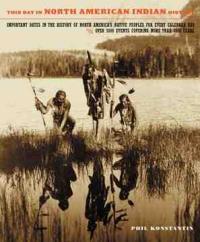
This Day in North American Indian History
This Day in North American Indian History is a one-of-a-kind, vastly
entertaining and informative book covering over 5000 years of North American Indian
history, culture, and lore. Wide-ranging, it covers over 4,000 important events
involving the native peoples of North America in a unique day-by-day format.
The thousands of entries in This Day in North American Indian History weave
a compelling and comprehensive mosaic of North American Indian history spanning more
than five millennia-every entry an exciting opening into the fascinating but little-
known history of American Indians.
Over 100 photographs and illustrations - This book has 480 pages, weighs 2.2 pounds and
is 8" by 9.5" in size. The Dates, Names and "Moons" section of these pages are based
on the book. |
This is the cover to my 4th book. Click here to got more info, or to order a copy or to get more info."
|
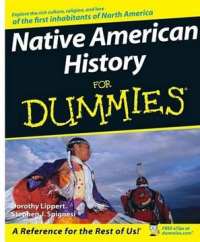
Native American History For Dummies
I wrote six of the twenty-four chapters in this book. I am credited with being the technical editor.
Book Description:
Native American History For Dummies introduces readers to the thousand-year-plus
history of the first inhabitants of North America and explains their influence on
the European settlement of the continent. Covering the history and customs of the
scores of tribes that once populated the land, this friendly guide features vivid
studies of the lives of such icons as Pocahontas, Sitting Bull, and Sacagawea;
discusses warfare and famous battles, offering new perspectives from both battle
lines; and includes new archaeological and forensic evidence, as well as oral
histories that show events from the perspective of these indigenous peoples. The
authors worked in concert with Native American authorities, institutions, and
historical experts to provide a wide range of insight and information.
|

This is the cover to my 3rd book. Click here to got more info, or to order a copy or to get more info
|
Treaties With American Indians I wrote an article and several appendix items for this book.
Clips from a review on Amazon.com: *Starred Review* In the 93 years from 1778 until 1871, there were
more than 400 treaties negotiated by Indian agents and government officials.
Editor Fixico and more than 150 contributors have crafted a three volume comprehensive tool that will
soon become essential for anyone interested in the topic.
A resource section with lists of ?Alternate Tribal Names and Spellings,? ?Tribal Name Meanings,?
(<---- I wrote this part) Treaties by Tribe,? and ?Common Treaty Names? and a bibliography and
comprehensive index are repeated in each volume. This
impressive set has a place in any academic library that supports a Native American studies or
American history curriculum. It is the most comprehensive source of information on Canadian-Indian treaties and
U.S.-Indian treaties. Also available as an e-book.
|

"The Wacky World of Laws"
It was just released in May 2009.
|
The Wacky World of Laws. Click on the cover to order a copy or to get more info.
The Wacky World of Laws is a compilation of U.S. and International Laws that are out of the ordinary.
With the U.S. churning out 500,000 new laws every year and 2 million regulations annually, this book
is the ideal go-to book fro everyone who wants a good laugh at the expense of our legal system. Law
so often can be boring! Now with The Wacky World of Laws, you can be the hit of any water cooler
conversation, and amaze your friends with precious legal nuggets.
I wrote most of this book. It is my fifth book.
|
(copyright, © Phil Konstantin, 2010)

Return to Previous Website

since September 4, 2005