August 2011 Newsletter from
"This Day in North American Indian History"
by Phil Konstantin
Copyright © © Phil Konstantin (1996-2013)
Click Here To Return To The Previous Website
.
.
.
.
.

.
.
.
.
================================================
Phil Konstantin's Delayed August 2011 Newsletter
================================================

Greetings,

The service I use to distribute my newsletter has been out of service.
Here is the message they just sent me:


Dear Topica Discussion List Clients,

On behalf of the entire Topica team I would like to thank you for your
patience as we worked to resolve the issues from the past week and a
half that have made some of your lists inaccessible. The issue has been
resolved, and all your lists should be restored.

Since the month is half over, I'll be putting this month's material into
next month's newsletter.

========

For those of you who have asked, I have been recovering nicely from my
surgery. I'm still a bit sore, but things are MUCH better. Thanks for
all the kind wishes.

Phil


=========================
X+X+X+X+X+X+X+X+X+X+X+X+X
=========================

Since this is a shortened newsletter, I am including ALL of my
historical material for the rest of August.


August 15
1514: Spanish Bishop Bartoleme de las Casas released the Indians he held
as serfs in Hispaniola.
1642: In instructions to Pennsylvania Governor John Printz of New
Sweden, the queen of Sweden wished for “the wild nations” to be treated
kindly and in a humane manner. She also stated that the Indians were the
“rightful lords” of this land and must be treated accordingly.
1680: As a part of Tewa leader Popé’s coordinated attack on the Spanish
missions of New Mexico, the siege of Santa Fe began.
1749: Maliseet chiefs ratified and agreed to the Treaty of December 15,
1725.
1769: Kumeyaay Indians engaged in a second skirmished with the Spaniards
who had established the Mission San Diego de Alcala in what became San
Diego, California.
1782: Tonight, British Captain William Caldwell, Simon Girty, and 200
Indians surrounded Bryan’s Station in Kentucky in preparation to attack
the settlement the next day.
1812: British and Indian forces confronted Fort Detroit.
1812: General William Hull ordered Captain William Wells to abandon Fort
Dearborn in present-day Chicago. As the occupants were leaving, almost
500 Indians attacked them. Half of the Americans were killed; the other
half were taken prisoner.
1858: Lieutenant J. K. Allen and fifteen soldiers surrounded the Yakima
camp of Katihotes. They captured seventy-one Indians and some livestock.
A few of the captured Indians were determined to be the murderers of two
local miners. They were shot. Lieutenant Allen was killed during the
early-morning attack.
1861: Oktarharsars Harjo, called Sands by the whites, and Opothle
Yahola, representing the pro-Union Creeks, wrote to President Lincoln
requesting the protection promised in their removal treaties.
1862: The Santee Sioux’s annuity had not arrived on time. On August 5,
the Santee surrounded the food warehouse serving the upper villages. The
soldiers allowed them to take the food. The commander told Agent Thomas
Galbraith to give the Indians the food on credit. The Indians got
Galbraith to promise to distribute food to the Santee in the lower
villages. Today, Galbraith joined four local traders at the lower
villages. The Indians soon realized that Galbraith did not plan on
distributing the food until the money arrived. Galbraith asked the local
traders what they wanted to do. Andrew Myrick said, “If they are hungry,
let them eat grass or their own dung.” This comment came back to haunt
him when the Santee revolted. The Santee were furious, but they left
anyway.
1869: According to army records, members of the Third Cavalry fought
with a band of Indians near San Augustine Pass in New Mexico. No
casualties were reported.
1872: Captain William McCleave and Troop B, Eighth Cavalry, were
attacked by Indians on Palo Duro Creek in New Mexico Territory. Four
Indians were killed. One soldier and eight Indians were wounded.
1876: Sixth Cavalry soldiers and some Indian scouts fought a group of
Indians in “Red Rock Country,” Arizona. According to army documents,
seven Indians were killed and seven were captured. One soldier was
wounded in the fighting.
1876: Congress passed a law requiring the Indians to relinquish their
lands in the Powder River and the Black Hills regions.
1935: Cherokee humorist Will Rogers died.
1936: Secretary of the Interior Harold Ickes ratified the election to
adopt a constitution and bylaws by the Lac Du Flambeau Band of Lake
Superior Chippewa Indians of Wisconsin.
1959: By a vote of 21-0, the Articles of Association of the Pala Band of
Mission Indians, California, were adopted.
1987: The United States Post Office issued the Red Cloud stamp.
Every: Zia Pueblo festival.


August 16


August 16


August 16
1692: The Diego de Vargas campaign to reconquer New Mexico took place.
1740: According to some sources, a conference regarding a peace
agreement and a “covenant with the southern Indians” was held for the
next four days by representatives of Great Britain and the Six Nations.
1780: Northumberland County, Pennsylvania, settlers sent a petition to
the Supreme Executive Council asking for soldiers to defend them against
attacks from Indians raiding the area.
1782: About 300–400 Indians and a few whites, led by British Captain
William Caldwell and Simon Girty, attacked the settlement at Bryan’s
Station near Lexington, Kentucky. John Craig was commanding the
forty-two Americans inside the community’s fort. After several
skirmishes, the Indians eventually got tired of the fight and left the
next day. Only a few of the settlers were killed in this fight, but many
of the survivors died in the Battle of Blue Licks on August 19, 1782.
1812: Shawnee Chief Tecumseh had been commissioned as a brigadier
general by the British. With his Indians forces, he was instrumental in
the surrender of American forces at Fort Detroit.
1849: Indian Agent James Calhoun and Lieutenant Colonel John Washington
organized a military expedition on August 14. They left Santa Fe for the
Navajo lands.
1851: One in a series of treaties with California Indians was signed at
Reading’s Ranch. The treaty was designed to reserve lands and to protect
the Indians.
1872: A fight took place at O’Fallon’s Creek in Montana.
1872: Colonel D. S. Stanley and soldiers from the Twenty-Second Infantry
were attacked by a large group of Indians near the Yellowstone River in
Montana. Army reports did not mention the outcome of the skirmish.
1873: A tract of land was set aside as a reservation for the Crow
Indians as part of an agreement.
1880: Sergeant Edward Davern with eight soldiers from Troop F, Seventh
Cavalry, and three Indian scouts attacked a Sioux war party on Box Elder
Creek in Montana. Two hostile Indians were killed and one was wounded.
1881: Lieutenant Gustavus Valois and Troop I, Ninth Cavalry, battled
fifty Indians near Cuchillo Negro in New Mexico. Two soldiers were
killed, and Lieutenant George R. Burnett was wounded twice. Lieutenant
Burnett would win the Congressional Medal of Honor for his efforts in
rescuing a fallen comrade. First Sergeant Moses Williams, Sergeant Brent
Woods, and Private Augustus Walley would also win the nation’s highest
award for their bravery in the fighting, which lasted for several hours.
Several Indians were reported killed by Valois. Lieutenant F. B.
Taylor’s Ninth Cavalry forces had a skirmish with Indians near the Black
Range as well.
1954: The constitution of the Standing Rock Sioux Tribe was amended.
1964: The Pit River Indian Tribe unanimously adopted a constitution in a
meeting, according to their tribal council.
1980: The secretary of the interior had authorized an election for
amendments to the constitution and bylaws of the Lac Courte Oreilles
Band of Lake Superior Chippewa Indians of Wisconsin. The amendments
passed.


August 17


August 17


August 17
1755: Almost 400 Indians attacked John Kilburn’s stockade at Walpole,
Connecticut. Some sources recorded that the Indians were led by King
Philip. After a day of fighting, the Indians withdrew.
1765: Pontiac and the British signed a treaty.
1788: Losantiville (Cincinnati) was founded.
1822: The Lipan Apache signed a peace treaty with Mexico at Alcaldes de
Las Villas de la Provincia Laredo.
1836: Creek Indian and West Point graduate David Moniac was promoted to
captain during the Seminole War. He was killed in fighting on November
21, 1836.
1846: According to Admiral Stockton, California was now a part of the
United States.
1866: Soldiers from the First Arizona Infantry fought with a band of
Indians on the Salt River in Arizona. The army reported one Indian
killed and one captured.
1867: According to army records, Pawnee scouts led by Captain James
Murie fought with a band of hostile Indians near Plum Creek, Nebraska.
Fifteen hostiles were killed and two were captured.
1868: Forty Kansans had been killed recently by Indians. The governor
wrote the president asking for help.
1869: In an event that would contribute to the Baker Massacre (also
known as the Marias Massacre) that took place on January 23, 1870,
Malcolm Clarke was killed by several Piegan, including Owl Child, near
Helena, Montana.
1872: Captain Lewis Thompson reported one of his men from Troop L,
Second Cavalry, was wounded in a skirmish with Indians on the
Yellowstone River in Montana.
1876: President Grant, by executive order, corrected a survey mistake
and returned Uncompahgre Park and some prime farmland to the Ute
Reservation.
1880: Seventh Cavalry soldiers fought a group of Indians near the Little
Missouri River in Montana. According to army documents, two Indians were
killed and one was wounded.
1936: According to Federal Register No. 1FR01226, the government ordered
the purchase of land to create the Flandreau Indian Reservation in South
Dakota.
1961: The boundaries of the Cocopah Tribe Reservation near Somerton,
Arizona, were modified.
1983: John Fritz,  deputy assistant secretary of Indian affairs,
authorized an election for a proposed constitution for the Jamestown
Klallam Tribe of Indians.


August 18


August 18


August 18
1804: A treaty (7 Stat. 81) was concluded with the Delaware Indians at
Vincennes, Indiana. The treaty explained that the Indians wanted more
money and that the government wanted a connection between the Wabash
settlements and Kentucky. The Delaware ceded all of their lands between
the Ohio and Wabash Rivers. They also ceded lands below the tract ceded
by the Fort Wayne Treaty of June 7, 1803, and the road from Vincennes to
the falls of the Ohio River. The tribe got an extra $300 for ten years.
They received $300 a year for five years to teach them “agricultural and
domestic arts.” They got $400 worth of livestock and $800 worth of goods
immediately. Stolen horses were restored to their rightful owners. The
United States negotiated with the Piankashaw over lands both tribes
claimed. William Henry Harrison and five Indians signed the treaty.
1854: Captain Jesse Walker attacked the Modoc on Tule Lake. Several
minor engagements continued until a peace treaty was reached on
September 4, 1854.
1862: Santee Sioux attacked the Lower Agency in Minnesota as one of the
first moves of the Santee Sioux Uprising. As many as 400 whites died the
first day.
1863: As a part of the Canyon de Chelly Campaign, Kit Carson and General
James Charlatan were trying to starve the Navajos into submission.
General Charlatan put a bounty on Navajo livestock. Every good horse or
mule brought $20, quite a sum for those days. Each sheep earned a
dollar.
1865: Colonel Nelson Cole and troops composed of Missouri infantry and
artillery were marching from Nebraska to the Black Hills in southwestern
South Dakota. Colonel Samuel Walker and his troops from the Kansas
cavalry were marching from Fort Laramie in southeastern Wyoming to the
Black Hills. Their combined forces of 2,000 troops met on the Belle
Fourche River. Their orders were to meet General Patrick Connor on the
Rosebud River to engage the hostile Indians in the area. The soldiers’
supplies were running very short.
1868: Near Pawnee Fork in southwestern Kansas, Indians attacked a wagon
train. They stopped the train, but they were not able to capture it due
to resistance from the passengers. Cavalry from Fort Dodge arrived the
next day and scattered the Indians. However, the Indians returned twice
more. They were unsuccessful on both occasions. Five men were wounded.
The Indian casualties were estimated at five killed and ten wounded.
1871: A settler was killed and his livestock was run off by Indians
twelve miles from Fort Stanton in central New Mexico. Troops pursued the
Indians without success.
1872: Colonel D. S. Stanley and Companies D, F, and G, Twenty-Second
Infantry, skirmished with Indians at the mouth of the Powder River.
After the fight, the army moved toward O’Fallon’s Creek.
1877: Nez Perce Indians staged a raid at Camas Creek.
1881: Lieutenant G. W. Smith and twenty-nine cavalry troopers attacked a
band of hostile Indians fifteen miles from McEver’s Ranch in New Mexico.
Five soldiers, including Lieutenant Smith, were killed in the fighting.
A civilian volunteer, George Daly, was also killed.
1936: The secretary of the interior authorized an election for a
constitution and bylaws for the Fort McDowell Band of Mohave-Apache
Indians.
1976: The commissioner of Indian affairs authorized an election to
approve a constitution and bylaws for the Fort Sill Apache Tribe of
Oklahoma. The election was held on October 30, 1976.
1990: The Indian Law Enforcement Reform Act (104 Stat. 473) of August
18, 1990, was passed by Congress. It was intended to “clarify and
strengthen the authority for certain Dept. of the Interior law
enforcement services, activities, and officers in Indian country, and
for other purposes.”
Every: Chief Seattle Days (through August 20).


August 19


August 19


August 19
1607: English settlers officially found “the other” English colony on
North America. Unlike Jamestown, Popham was settled by just men and
boys. Popham (northeast of modern Portland, Maine) was established on
the bluffs overlooking the spot where the Kennebec River flows into the
ocean. The colony lasted only a little more than a year. The colony’s
second leader returned to England, taking the settlers with him, when he
inherited a sizeable estate in England.
1719: Joseph le Moyne, Sieur de Serigny, had assisted his brother Jean
le Moyne de Bienville with his attack on Pensacola. After the battle he
returned to his fortifications on Dauphin Island, Alabama. With 160
French soldiers and 200 local Indians, he prepared for a Spanish
assault. The Spanish invasion began. Two warships let lose a cannonade.
When 100 Spaniards attempted to land, le Moyne and the Indians fought
them off. The Spanish retreated and then gave up the fight.
1746: According to some reports, a conference was held for the next five
days between representatives of the British in Massachusetts and New
York and the Mississauga and Six Nations tribes regarding alliances.
1749: The Spaniards and the Apaches had been trying to arrange a peace
for some time. Four Apache chiefs, with their followers, buried a
hatchet in a special ceremony at San Antonio, Texas.
1782: Battles had been fought in many areas around Kentucky and
Virginia. On August 16, 300–400 Indians and a few whites, led by British
Captain William Caldwell and Simon Girty, attacked the settlement at
nearby Bryan’s Station near Lexington, Kentucky. When reinforcements
arrived, the Indians retreat to the area called the Blue Licks, a spring
on the Middle Fork of the Linking River. Despite the advise of many
frontiersmen such as Daniel Boone to wait for more soldiers, the militia
took off after the Indians. The militia fell into the Indians’ trap, and
about seventy soldiers were killed.
1825: A treaty was signed (7 Stat. 272) by William Clark and Lewis Cass
at Prairie du Chien, Wisconsin.
1830: Twenty-one Chickasaw leaders, with their agent Benjamin Reynolds,
met President Jackson in Franklin. They held a formal council in a few
days to discuss Jackson’s removal program.
1854: A Miniconjou Sioux named High Forehead killed a sickly cow near
Fort Laramie in southeastern Wyoming. The cow’s owner complained to the
fort’s commander. Brevet Second Lieutenant John L. Grattan and thirty
volunteers left the fort to find the Sioux involved. Grattan brashly
went to Conquering Bear’s Brule Sioux camp near Ash Hollow and demanded
the Indian who shot the cow. Grattan made numerous threats to the Sioux,
but they would not hand over High Forehead. During the parley, a shot
rang out, and Grattan’s artillery gunners opened fire on the camp.
Conquering Bear tried to get both sides to stop shooting, but he was hit
by an artillery round. Eventually, all but one of Grattan’s men were
killed in the fighting.
1862: The Santee Sioux attacked New Ulm, Minnesota.
1868: On Twin Buttes Creek, Kansas, a group of woodchoppers was attacked
by approximately thirty Indians. Three of the men were killed, and all
two dozen of their animals were taken, according to Lieutenant G. Lewis,
Fifth Infantry.
1869: According to army records, people in a wagon train from Camp Cook
in Montana fought with a band of Indians near Eagle Creek, Montana. One
settler and four Indians were killed. Two Indians were wounded. Settlers
also fought with a group of Indians near Helena, Montana. One settler
was killed and one was wounded.
1869: According to army records, members of the First Cavalry and
Thirty-Second Infantry fought with a band of Indians near Camp Grant in
the White Mountains of Arizona. Eleven Indians were killed, two were
wounded, and thirteen were captured. The fighting started on July 13.
1873: Indians fought with soldiers from the Twenty-Fifth Infantry near
Barrilla Springs, Texas, according to army documents. One Indian was
killed.
1880: Indian scouts attacked a band of hostile Indians north of the
mouth of O’Fallon’s Creek in Montana. A dozen head of stock were
recovered.
1938: A constitution and bylaws for the Alabama-Coushatta were approved.
They were ratified on October 17, 1939.
1960: On March 3, 1921, the federal government set aside land on the
Fort Peck Indian Reservation in Montana to establish the townsite of
Lodge Pole. By Public Land Order No. 2184, several “undisposed of” lots
within the townsite were returned to tribal ownership.
1974: Amendments 7–11 to the constitution and bylaws of the Lac Du
Flambeau Band of Lake Superior Chippewa Indians of Wisconsin were
approved and became effective.


August 20


August 20


August 20
1722: According to some sources, a conference on peace and boundary
lines was held between representatives of the British in New York,
Pennsylvania, and Virginia and the Five Nations.
1789: Juan de Ugalde was Commanding general of all Spanish forces in
Coahuila, Nuevo León, Nuevo Santander, and Texas. He started a major
expedition against the Apache.
1789: An “Act Providing for the Expences Which May Attend Negotiations
or Treaties with the Indian Tribes, and the Appointment of Commissioners
for Managing the Same” was approved by the United States.
1794: Little Turtle had seen how skillfully General Wayne was at
organizing his forces. Knowing this would not be like the easy
encounters he had had with Harmar and St. Clair, Little Turtle suggested
making peace with the whites. He was called a coward, and Turkey Foot
took his place as war chief. About 800 warriors, including 100
Cherokees, were waiting for Wayne’s forces near Fort Miami (near modern
Toledo, Ohio). Many of the Indians had been fasting for days to be “pure
for battle.” Wayne took this into consideration and slowed his advance
so they were weaker.
1802: According to some sources, Seminoles near the town of St. Marks in
northern Florida signed a treaty with the Spanish.
1819: Major Long reached a  “Konzas” village along the Vermillion River
as a part of his scientific expedition in modern Kansas.
1851: One in a series of treaties with California Indians was signed in
Lipayuma. This treaty set aside lands for the Indians and protected them
from Americans.
1854: Snake Indians attacked a wagon train near Fort Boise, Idaho. Nine
men, two women, and eight children were killed.
1862: The Santee Sioux engaged in more fighting in Minnesota when they
attacked Fort Ridgely.
1868: According to army records, members of the Thirty-First Infantry
fought with a band of Indians near Fort Buford, Dakota Territory. Three
soldiers were killed and three were wounded. Lieutenant C. C. Cusick was
also wounded during the fighting.
1868: Comstock’s Ranch on Pond Creek in Kansas was attacked this
evening. Two men were killed; the others escaped by fleeing into Pond
Creek.
1874: Three troops from the Eighth Cavalry led by Major William E. Price
left Fort Union (New Mexico) to seek out renegade Indians in the valleys
of the Canadian and Washita Rivers.
1877: Nez Perce captured 100 mules from General Oliver Howard’s command
at Camas Meadows, Idaho. Private Wilfred Clark, Company L, Second
Cavalry, would be awarded the Congressional Medal of Honor for his
actions today and August 9 at the Battle of Big Hole (Montana). Captain
James Jackson, First Cavalry, would also be awarded the Congressional
Medal of Honor for retrieving the body of his trumpeter while under
heavy fire. Company L Farrier William H. Jones would also receive the
Congressional Medal of Honor for his gallantry during today’s action and
for his efforts in the battle of May 7, 1877, against the Sioux.
Lieutenant H. M. Benson and six soldiers were wounded.
1878: Second Infantry soldiers fought a group of Indians near Big Creek,
Idaho. According to army documents, one soldier was killed.
1879: First Cavalry soldiers fought a group of Indians near the Salmon
River, Idaho. According to army documents, one soldier was killed.
1948: The Mi’kmaq Eskasoni First Nation Reserve of Eskasoni No. 3A was
established in Nova Scotia.


August 21


August 21


August 21
1680: The Spanish left Santa Fe.
1689: Frenchmen convinced local Indians to attack British Fort Charles
in Maine. Several settlers were killed in the fighting.
1739: According to some sources, an agreement covering land cession and
alliance was reached by representatives of the British in Georgia and
the Creeks.
1805: A treaty (7 Stat. 91) was concluded with the Delaware, Miami, Eel
River, Wea, and Potawatomi Nations at Grouseland near Vincennes,
Indiana. The treaty referred to the Treaty of August 18, 1804. The
Delaware ceded lands to the Miami. The Miami ceded lands along the Ohio
River from the Kentucky River to Fort Recovery on the Ohio-Indiana line.
Each tribe received the following payments per year for the next ten
years: Miami, $600; Eel Rivers, $250; Wea, $250; Potawatomi, $500. The
treaty also addressed several intertribal issues. The document was
signed by William Henry Harrison and nineteen Indians.
1861: John Ross had called for a meeting to be held at Tahlequah to
discuss the U.S. Civil War. About 4,000 Cherokees attended the meeting
in Indian Territory (present-day Oklahoma). It was decided that a united
Cherokee Nation was the best policy, so they voted to side with the
Confederacy. The Cherokee signed a treaty with the Confederacy in
October.
1862: In Tahlequah, Indian Territory (modern Oklahoma), Stand Watie was
elected principal chief during the first Confederate Cherokee
Convention.
1869: Military guards repelled an attack by Indians on Coyote Station,
Kansas. No casualties were sustained on either side.
1872: Today and the next day, Colonel D. S. Stanley and Companies D, F,
and G, Twenty-Second Infantry, fought with Indians along O’Fallon’s
Creek in Montana.
1871: Treaty No. 2 (Manitoba Post Treaty) was concluded between the
Canadian government and the Chippewa, who sold 35,700 square miles of
land in exchange for certain reservation lands, an annuity, schools, and
other items.
1971: Southwestern Indian Polytechnical Institute was opened in
Albuquerque, New Mexico.
1976: The commissioner of Indian affairs had authorized an election for
an amendment to the constitution and bylaws of the Manzanita Band of
Mission Indians. It was approved 14-3.


August 22


August 22


August 22
1670: Hiacoomes preached his first sermon to his Wampanoag people on
Martha’s Vineyard.
1694: According to some sources, a peace conference was held between
representatives of the Five Nations and British colonies in Connecticut,
Massachusetts, New Jersey, New York, and Pennsylvania.
1710: According to some sources, a land-cession agreement was reached
between representatives of the British in New York and the Mohawk
Indians.
1749: Pennsylvania authorities signed an agreement to purchase a large
parcel of land between the Delaware and Susquehanna Rivers from the
Iroquois, Delaware, and Shomokin Tribes. This purchase included most of
what became modern Carbon, Columbia, Dauphin, Lebanon, Luzerne, Monroe,
Northumberland, Pike, Schuylkill, and Wayne Counties in Pennsylvania.
1777: After maintaining a siege on Fort Stanwix (near modern Rome, New
York) since August 3, British and Indian forces abandoned the siege. The
Indian forces had been disheartened by rumors that General Benedict
Arnold was leading a force of superior numbers to relieve the siege.
1806: Pike’s expedition had reached a village of the Little Osage near
the forks of the Osage River in modern Missouri. He held a council there
with both the Grand and Little Osage. The Little Osage were led by
Tuttassuggy (The Wind), and the Grand Osage were led by Cheveau Blanc
(White Hair).
1830: Meeting with Secretary of War Eaton and Jim Coffee, Chickasaw
leaders were told that the federal government could not protect them
from state laws. The Indians were informed that their only hope was to
move to the Indian Territory (present-day Oklahoma). The government
offered to pay for the removal, support them for a year, and give them
new land. The Chickasaw discussed the issue for a week.
1851: One in a series of treaties was signed with California Indians at
the Russian Camp (Camp Fernando Felix). This treaty promised to protect
the Indians from angry Europeans and to reserve them lands.
1860: Hunkpapa and Blackfeet vandalized Fort Union.
1862: A force of 800 Santee Sioux attacked Fort Ridgely in south-central
Minnesota. The fort was defended by approximately 150 soldiers and two
dozen volunteers. The Sioux sneaked up to the fort and tried to set it
on fire. When the Sioux attacked, the army responded with an artillery
barrage. Little Crow was wounded in the fighting, and Mankato took over.
The artillery made the difference in the fighting, and the Sioux
retreated.
1867: According to army records, members of the Fourth Cavalry fought
with a band of Indians near Fort Chadbourne, Texas. Two soldiers were
killed.
1867: According to army records, members of the Boise Indian scouts
fought with a band of Indians near Surprise Valley, California. Two
Indians were killed and seven were wounded.
1868: According to army records, members of the Eighth Cavalry fought
with a band of Indians near the Santa Maria River in Arizona. Two
Indians were killed and one was captured.
1872: The Sioux fought the army under Colonel David Stanley near
O’Fallon’s Creek.
1874: Under the new authority to pursue hostile Indians on reservations,
Lieutenant Colonel J. W. Davidson and Troops E, H, and L, Tenth Cavalry,
and Company I, Twenty-Fifth Infantry, from Fort Sill in southern Indian
Territory (present-day Oklahoma), entered the Wichita Agency. They
engaged Comanche and Kiowa who had taken refuge with friendly Indians on
the reservation. Four soldiers were wounded in the fighting. Sixteen
Indians were killed or wounded. The hostiles attempted to burn the
agency, but the soldiers prevent it.
1877: The Nez Perce entered Yellowstone Park.
1883: The Dawes Commission was sent to Dakota Territory to determine if
the methods used to obtain Sioux signatures on a land-cession treaty
were fair. Today, Sitting Bull addressed the commission at the Standing
Rock Agency. The commissioners treated Sitting Bull as any other Sioux.
Sitting Bull was offended for not being treated as a great leader. He
led the Sioux out of the meeting. Eventually, he was convinced by fellow
Sioux that he was not insulted, and he met with the commission a second
time. This time it was the commissioners who were offended. Their
efforts were to mold the Indians into white men. Sitting Bull did not
accept this attitude.


August 23


August 23


August 23
1724: British forces under Captain Moulton staged a surprise attack on
an Abenaki village at Norridgewock. Twenty-seven people, including a
resident French priest, Father Rasles, were scalped by the English. The
village was burned. This was a big blow to the spirit of the local
Indians.
1732: This day marked the beginning of a peace conference held in
Philadelphia with the local Indians. Attending the meeting were several
Iroquois chiefs, including Onondaga Chief Shikellamy.
1862: The Santee Sioux engaged in another fight.
1867: According to army records, members of the Fourth Cavalry fought
with a band of Indians near Fort Concho, Texas. One soldier was killed.
1868: The stage to Cheyenne Wells returned after being chased by thirty
Indians. The Denver stagecoach was attacked between Pond Creek, Kansas,
and Lake Station, Colorado, according to Captain Bankhead, Fifth
Infantry, commander of Fort Wallace in western Kansas. Eight settlers
were killed.
1868: According to army reports, Indians attacked settlers in northern
Texas; eight people were killed and 300 cattle were stolen. Bent’s Fort
in the Texas Panhandle reported that an Indian attack netted fifteen
stolen horses and mules and four head of cattle.
1868: According to army records, members of the Thirty-First Infantry
fought with a band of Indians near Fort Totten, Dakota Territory. Three
soldiers were killed.
1876: “Treaty 6 Between Her Majesty The Queen and The Plain and Wood
Cree Indians and Other Tribes of Indians at Fort Carlton, Fort Pitt and
Battle River with Adhesions” was signed in Canada.
1876: Sixth Infantry soldiers on the steamers Josephine and Benton
fought some Indians near the mouth of the Yellowstone River in Montana.
According to army documents, one soldier was killed.
1904: An executive order modified the boundaries of the Fort McDowell
Mohave–Apache Community Reservation.
1944: An election to approve a constitution and bylaws for the
Metlakatla Indian Community of the Annette Islands Reserve in Alaska was
authorized by the assistant secretary of the interior. The election was
held on December 19, 1944.
1955: An election was authorized to adopt an amended constitution and
bylaws for the Hualapai Tribe of the Hualapai Reservation in Arizona by
the assistant secretary of the interior. The election was held on
October 22, 1955.


August 24


August 24


August 24
1781: Joseph Brant and his Mohawk warriors ambushed Pennsylvania militia
led by Archibald Lochry in Indiana on the Ohio River. Brant routed the
militia. Sixty-four militiamen were killed and forty-two were captured.
1816: William Clark, Auguste Chouteau, and Ninian Edwards and
representatives of the Potawatomi, Chippewa, and Ottawa Tribes signed a
treaty (7 Stat. 146) in St. Louis. The Indians received annuities for
land giveaways. They were allowed to peacefully hunt on their old lands
as long as the lands remained in the hands of the government.
1818: The Quapaw Indians signed a treaty (7 Stat. 176) in St. Louis
covering lands along the Arkansas and Red Rivers.
1834: After Chickasaw Head Chief Levi Colbert died, the Chickasaw
council voted to replace him with James Colbert.
1835: The United States signed a treaty (7 Stat. 474) with the Choctaw,
Comanche, Creek (Muskogee), Cherokee, Osage, Quapaw, Seneca, and Wichita
at Camp Holmes “on the eastern border of the Grand Prairie, near the
Canadian River.” Governor Montfort Stokes and Brigadier General M.
Arbuckle represented the United States. Many Indians signed the treaty.
1853: General Lane and approximately 200 troops found some Rogue River
Indians. A fought ensued near Table Rock.
1856: Eighty Cheyenne attacked a mail train near Fort Kearny in southern
Nebraska.
1866: Soldiers from the First Arizona Infantry fought with a band of
Indians near the San Francisco Mountains (north of modern Flagstaff) in
Arizona. The army reported that one Indian was wounded and two were
captured.
1868: Near Bent’s Fort, three stagecoaches and one wagon train were
attacked by Indians.
1869: For his actions on July 8, 1869, Mad Bear received the
Congressional Medal of Honor.
1870: With the military rapidly approaching his base at Fort Garry
(Winnipeg), Louis Riel decided to flee to the United States. This
effectively ended the Red River Rebellion in Canada.
1877: The cabinet voted to send a commission to talk with Sitting Bull
at Fort Walsh.
1982: An election approved Amendments 12, 13, and 14 to the constitution
and bylaws of the Lac Du Flambeau Band of Lake Superior Chippewa Indians
of Wisconsin.


August 25


August 25


August 25
1636: Boston’s military standing committee sent John Endecott, William
Turner, John Underhill, and an expedition to Block Island. This was in
retaliation for the murder of several English.
1665: Construction began on the first of four forts that were built in
Chambly, Quebec, southeast of Montreal. This fort was called Fort St.
Louis. Later versions were called Fort Chambly. Its primary purpose was
to defend nearby settlers from attacks by the Iroquois.
1737: An agreement was signed by Thomas Penn and Munsee Chiefs
Manawkyhickon and Nutimus. Teeshacomin and Lappawinzoe also signed. The
agreement recognized an old deed made in 1686. The agreement called for
Indian lands to be sold along the Delaware River for the distance that a
man could walk in a day and a half. This was called the Walking Purchase
and was performed on September 19, 1737.
1828: The United States signed treaties with five different Indian
nations.
1835: The Creeks wrote President Jackson telling him they were ready to
move west but that they needed to sell their land to afford to go. They
wanted the money promised to them by treaty.
1856: Captain G. H. Stuart and forty-one soldiers from Fort Kearny in
southern Nebraska caught up to the Cheyenne who attacked a mail train
the day before. The army killed ten Indians in the fight.
1856: Cheyenne attacked four wagons led by the secretary of Utah, A. W.
Babbitt, on Cottonwood Creek. Two men and one child were killed and a
woman was kidnapped. Babbitt was transporting money and goods for the
Mormon Church.
1862: New Ulm, Minnesota, was evacuated due to the Santee Sioux
Uprising.
1868: Acting Governor Hall of Colorado telegraphed the military that 200
Indians were “devastating southern Colorado.” The military also received
a report of Indians killing an animal herder near Fort Dodge in
southwestern Kansas.
1869: According to army records, members of the Eighth Cavalry fought
with a band of Indians near the Santa Maria River in Arizona. Nine
Indians were killed and seven were wounded. The Eighth Cavalry also
fought with a band of Indians near Camp Toll Gate at Tonto Station in
Arizona. Six Indians were killed and one was captured.
1871: Indians skirmished with a group of soldiers from the Third Cavalry
near Arivaypa Canyon, Arizona, according to official army records. Five
Indians were killed.
1876: An act (19 Stat. 200) was passed by Congress. It was intended to
“provide the Commissioner of Indian Affairs with the sole power and
authority to appoint traders to the Indian tribes.”
1877: At the Nez Perce camp just north of Yellowstone Lake, Captain
Robert Pollock made the following observation about chasing the Nez
Perce: “The whole command is weary and tired of marching. This game of
hide and seek is getting mighty monotonous.… My men are in excellent
health. They do their duty without much grousing. The lack of women and
whiskey are of more concern than the Indians.”
1917: A court in Calgary found Inuit Sinnisiak and Uluksuk guilty of
murdering a priest who hired them as guides. The previous week they had
been found not guilty of killing another priest in the same party. This
was the first trial of an Inuit in Canada.
1969: Amendments 6–9 to the constitution and bylaws for the Oneida Tribe
of Indians of Wisconsin were approved.
1980: Casimir LeBeau, area director, Minneapolis area office, Bureau of
Indian Affairs, ratified an election for an amendment to the
constitution and bylaws of the Lac Courte Oreilles Band of Lake Superior
Chippewa Indians of Wisconsin.


August 26


August 26


August 26
1842: The Caddo signed a treaty in Texas. They agreed to visit other
tribes and try to convince them to also sign treaties with Texas.
1858: In what was called the Battle of Four Lakes, forces under Colonel
George Wright fought for about three hours with Coeur d’Alene, Columbia
River, Colville, Kalispel, and Spokane Indians. The army defeated the
Indians.
1866: Soldiers from the First Cavalry and First Oregon Cavalry fought
with a band of Indians on Owyhee River in Idaho. The army reported that
seven Indians were killed.
1869: According to army records, members of the Eighth Cavalry fought
with a band of Indians near Camp Toll Gate on the Tonto Plateau in
Arizona. One soldier was killed.
1872: A sergeant, six soldiers, and two Ree Indian scouts were twelve
miles from Fort McKeen (later Fort Abraham Lincoln) in central North
Dakota when they were attacked by more than 100 Sioux. According to army
reports, the two Ree Indian scouts were killed in the fighting.
1876: General George Crook and his soldiers left General Alfred “One
Star” Terry. They went east.
1876: Treaty Number 6, covering much of modern Alberta and Saskatchewan,
was signed by the Cree, Chipewyan, and Saulteaux and the Canadian
government.
1960: The Cold Spring Rancheria in Fresno County, California, adopt an
official tribal roll.
1966: Commissioner of Indian Affairs Robert Bennett approved the results
of an election to amend the revised constitution and bylaws of the
Sisseton Wahpeton Sioux Tribe of South Dakota. The election took place
on August 1–2, 1966.
1967: The assistant secretary of the interior had authorized an election
for the adoption of an amendment to the constitution and bylaws for the
Ponca Tribe of Indians of Oklahoma. It was approved in an election by
the tribal members.
1985: John W. Fritz, the deputy assistant secretary of Indian affairs,
authorized an election for a new constitution for the Tohono O’odham
Nation.


August 27


August 27


August 27
1735: According to some sources, a peace agreement was reached between
representatives of the British in Massachusetts Colony and the Iroquois
of Canada.
1756: Delaware Indians staged a series of attacks along the
Maryland-Pennsylvania border. Near Salisbury Plains, thirty-nine British
were killed. In other fighting in the area of Franklin County,
Pennsylvania, a little more than twenty soldiers and settlers were
killed.
1832: Black Hawk surrendered.
1836: The Battle of Cow Creek took place between Creek warriors and the
Georgia militia near the Okefenokee Swamp.
1868: According to a report filed by Captain Henry C. Bankhead,
commander of Fort Wallace in western Kansas, several citizens had been
killed by Indians in the last few days near Sheridan (near modern
Winona) and Lake Station, Colorado. Soldiers escorting a stagecoach near
Cheyenne Wells were able to fight off an Indian attack. The presence of
250 Indians caused Captain Edmond Butler, Fifth Infantry, and his wagon
train to return to Big Springs. Acting Colorado Governor Hall again
telegraphed the president that Arapaho were killing settlers all over
southern Colorado. In a separate report, Lieutenant F. H. Beecher, Third
Infantry, reported that two experienced scouts were shot in the back by
Indians who had pretended to be friends. One survived by using the
other’s dead body as a shield.
1868: According to army records, members of the Thirty-Eighth Cavalry
Infantry fought with a band of Indians in the Hatchet Mountains in New
Mexico. Three Indians were killed.
1869: According to an Indian taken prisoner after the Battle on Prairie
Dog Creek in Kansas on September 26, 1869, Pawnee Killer and Whistler’s
Sioux attacked a surveying party about twenty miles south of the Platte
River.
1872: Sergeant Benjamin Brown, Company C, Twenty-Fourth Infantry, and
four soldiers defeated a superior force of local Indians at Davidson
Canyon near Camp Crittenden, Arizona. Brown would be awarded the
Congressional Medal of Honor.
1872: Indians skirmished with a group of settlers near the Santa Cruz
River, Arizona, according to official army records. Four settlers were
killed. Also in Arizona, soldiers from the Fifth Cavalry fought with
some Indians near Davidson’s Creek. Lieutenant R. T. Stewart, one
soldier, and one civilian were killed.
1878: Captain James Egan and Troop K, Second Cavalry, were following a
group of Bannock who had been stealing livestock along the Madison
River. Near Henry’s Lake, Captain Egan’s forces skirmished with the
Bannock and recovered fifty-six head of livestock. The escaping Bannock
were starting to follow the trail taken by the Nez Perce last year.
1935: The Indian Arts and Craft Act (104 Stat. 4662) was passed by
Congress. Its purpose was to “promote the economic welfare of the Indian
tribes and Indian individuals through the development of Indian arts and
crafts and the expansion of the market for the products of Indian art
and craftsmanship.”
1958: An act was passed entitled “Contracts with Indian Tribes or
Indians” (72 Stat. 927). It required that all agreements made by any
person with any individual or tribe of Indians for “the payment or
delivery of any money or thing of value must follow certain rules and be
approved by the Secretary of the Interior and the Commissioner of Indian
Affairs.”
1980: The constitution of the Iowa Tribe of Kansas and Nebraska was
amended.


August 28


August 28


August 28
1565: Leading an expedition of 1,500 soldiers and colonists, Pedro
Menendez de Aviles landed on the coast of Florida. His mission was to
defeat the Protestants in the area and to claim the land for Spain. Next
month he established the town of St. Augustine.
1645: The United Colonies of Massachusetts had decided to raise an army
to fight the Narragansett Indians after the Narragansett start fighting
with the  Mohegans, who were English allies. Fearing the superior force
of the English, the Narragansett agreed to a peace treaty. The treaty
gave the English all of the Pequot lands the Narragansett had
appropriated after the Treaty of Hartford of September 21, 1638. (Also
recorded as happening on August 27, 1645.)
1676: The last Indian surrendered in King Philip’s War.
1686: According to an alleged copy of a deed displaying today’s date,
Delaware Chiefs Mayhkeerickkishsho, Sayhoppy, and Taughhoughsey sold
lands along the Delaware River to William Penn. The deed specified that
the land encompassed the distance “back into the woods as far as a man
can go in a day and a half.” A copy of this deed was found by Thomas
Penn in 1734. The implementation of this deed was called the Walking
Purchase. The walk was started on September 19, 1737. The manner in
which it was done led to recriminations on both sides. (Also recorded as
happening on August 30.)
1754: According to some reports, an agreement on friendship and land
cessions was reached by representatives of the British in North Carolina
and the Catawba Indians.
1784: Father Junipero Serra died. During his lifetime, he established
many missions in what became modern California.
1811: Tecumseh spoke with Chief Big Warrior and his band of Upper
Creeks. He tried to get them to join his revolt.
1833: Assiniboine attacked Piegan Indians at Fort McKensie.
1836: John Campbell, U.S. commissioner to the Creeks, signed a contract
with Opothleyaholo and other friendly Creek leaders. Campbell realized
that the Creeks needed money to move to Indian Territory (present-day
Oklahoma) and to satisfy their debts in Alabama. The government gave the
Creeks their $31,900 annuity in advance so that they could pay their
debts. The Creeks agreed to provide 600–1,000 warriors to fight the
Seminoles. The Creeks served until the Seminoles surrendered totally.
The Creeks got to keep any plunder they could find.
1857: Fort Abercrombie was established as an outpost against the Sioux.
1868: Near Kiowa Station, Indians killed three men and stole fifty head
of cattle. Kiowa station keeper Stickney was also attacked and wounded
while driving a wagon. The station keeper at Reed’s Spring was also
attacked and driven off by Indians.
1868: Army records indicated that Pawnee scouts under Captain C. E.
Morse fought with a band of hostile Indians near the Platte River in
Nebraska. No injuries were reported during the fighting.
1875: Indians fought with soldiers from the Third Cavalry along the
North Platte River north of Sidney, Nebraska. According to army
documents, no casualties were reported in this encounter, which lasted
until September 2.
1876: “Treaty 6 Between Her Majesty The Queen and The Plain and Wood
Cree Indians and Other Tribes of Indians at Fort Carlton, Fort Pitt and
Battle River with Adhesions” was signed in Canada.
1879: According to government sources, Indians had set numerous fires in
the mountains west of Hot Sulphur Springs, Colorado. The fires rages out
of control for some time.
1942: According to Federal Register No. 7FR07458, the Shoshone and
Arapaho tribes of the Wind River Reservation in Wyoming got back a small
part of the lands they had ceded to the United States in 1905.
1976: Charles James, the area director of the Bureau of Indian Affairs,
had authorized an election for the adoption of an amendment to the
constitution and bylaws for the Ponca Tribe of Indians of Oklahoma. It
was approved by a vote of 40-8.
1990: The Mi’kmaq Afton First Nation Reserve of Summerside was
established in Nova Scotia.
Every: Spanish and Indian fiestas in Isleta Pueblo.


August 29


August 29


August 29
1758: The First State Indian Reservation in Brotherton, New Jersey, was
established. It was primarily for the Lenni Lenape.
1759: Mohegan Samson Occom was ordained as a minister by the Suffolk
Presbytery of Long Island, New York. While living with Reverend Eleazar
Wheelock, he had studied numerous foreign languages, including Hebrew
and Greek. Eventually, he was sent to England to help raise funds for
Wheelock’s Indian “Charity” School. Occom was the first Indian minister
to deliver a sermon in England. His fund-raising efforts were so
outstanding that Wheelock’s School could afford to move to New Hampshire
and eventually became Dartmouth College.
1779: The Battle of Newton (near modern Elmira, New York) took place.
General John Sullivan and 4,500 soldiers were part of a major expedition
to defeat the Iroquois and the British in New York. British Major John
Cutler and Mohawk Chief Joseph Brant commanded a British and Indian
force of 600 warriors and soldiers. Being vastly outnumbered, the
British and Indian forces gave up the field to the Americans. Even
though the battle lasted several hours, only five Americans, five
British, and twelve Indians were killed.
1796: In a speech directed to the Cherokees, President Washington
announced his decision to appoint Colonel Benjamin Hawkins as the “First
General or Principal Agent for all four southern Nations of Indians.”
1821: Lewis Cass and Solomon Sibley signed a treaty (7 Stat. 218) with
the Chippewa, Ottawa, and Potawatomi Indians in Chicago, Illinois. The
Indians gave up lands in southwestern Michigan.
Winnebago Picture listed for 8/29/1829, should go on 8/1/1829
1858: Captains McLane and Lucero, with Indian Agent Yost and
approximately sixty men, were on an expedition to Fort Defiance in
northwestern Arizona against the Navajos. Working on a deadline, the
Navajos had failed to produce the murderer who killed a black boy at the
fort on July 12, 1858. At Bear Springs, the soldiers encountered a
Navajo camp and they struck. Several Indians were killed in the
fighting. The soldiers then moved on to Fort Defiance.
1865: The army and Indians fought in the Powder River country. Forces
under General Patrick Connor attacked an Arapaho village at a site that
is near modern Sheridan, Wyoming.
1868: According to Captain William H. Penrose, Third Infantry, the
commander of Fort Lyon in southeastern Colorado, Indians attacked
thirteen wagons eighteen miles from the Arkansas River. The whites
escaped to Fort Lyon, but the oxen were killed and the train was
destroyed.
1878: As a part of the Bannock War, Fifth Infantry soldiers and some
Indian scouts fought a group of Indians on Index Peak, Wyoming.
According to army documents, no casualties were reported. The fighting
continued through the next day.
1893: A trust patent was issued for 2,840 acres for the Pechanga Indian
Reservation–Temecula Band of Luiseno Mission Indians.
1956: According to Federal Register No. 21FR6681, lands that were
originally set aside to be townsites within the Flathead Indian
Reservation in Montana and were “undisposed of” were returned to the
tribal ownership of the Confederated Salish and Kootenai Tribes on the
Flathead Reservation.
1978: The area director, Minneapolis area office, Bureau of Indian
Affairs, had authorized an election for amendments to the constitution
and bylaws of the Lac Courte Oreilles Band of Lake Superior Chippewa
Indians of Wisconsin. The election would be held on December 15, 1978.


August 30


August 30


August 30
1645: A peace treaty between the Dutch, led by Willem Kieft, and several
local tribes was signed at Fort Orange (in modern Albany, New York).
This treaty concluded a protracted conflict in the area.
1686: According to an alleged copy of a deed dated today, Delaware
Chiefs Mayhkeerickkishsho, Sayhoppy, and Taughhoughsey sold lands along
the Delaware River to William Penn. The deed specified that the land
encompassed the distance “back into the woods as far as a man can go in
a day and a half.” A copy of this deed was found by Thomas Penn in 1734.
The implementation of this deed was called the Walking Purchase. The
walk was started on September 19, 1737. The manner in which it was done
led to recriminations on both sides. (Also recorded as happening on
August 28.)
1690: A combined force of British, Yamassee, and Yuchi Indians attacked
the Spanish mission of San Juan de Guacara in northern Florida. Many
Timucua Indians in the area had been converted to Christianity or were
loyal to the Franciscan monks. All of the Timucua Indians at the mission
were killed in the fighting.
1813: The Red Sticks (the antiwhite faction of the Creeks) attacked Fort
Mims just north of Mobile, Alabama, on Lake Tensaw. About 800 Red Stick
Creeks warriors (some estimates range between 400 and 1,000), led by
Chiefs Peter McQueen and William Weatherford (Lume Chathi–Red Eagle),
rushed into the open fort at noon and killed 107 soldiers and 260
civilians, including 100 black slaves. The fort commander, Major Daniel
Beasley, had done a poor job of preparing the fort for the Creek War.
This laxity led to the success of the Creek attack. The defenders were
brutally attacked, and only a few Americans escaped. The defense of the
fort was led by militia Captain Dixon Bailey, a half-blood Creek. Bailey
died in the fighting. During the five-hour battle, between thirty-six
and 100 Red Stick Creeks were killed, according to different sources.
1819: The Kickapoo signed a treaty (7 Stat. 202) at Fort Harrison. They
ceded all of their lands along the Wabash River.
1831: The Treaty of Miami Bay, Ohio (7 Stat. 359), was signed by the
Ottawa and James Gardiner. The Indians ceded lands around the Miami and
Auglaize Rivers and agreed to move just west of the Mississippi River.
1838: Choctaw Chief Mushulatubbe died from smallpox near the Choctaw
Agency.
1841: Kiowa skirmished with the Texas–Santa Fe expedition near the Pease
River. Kiowa War Chief Adalhabakia was killed in the fighting.
1849: The expedition led by Indian Agent James Calhoun and Lieutenant
Colonel John Washington camped in Tunicha Valley. Several Navajos who
lived nearby visited the camp. They were informed that the Navajos were
punished for not living up to previous treaties.
1855: A treaty was signed with 450 of the Penateka or Southern Comanche
in Texas.
1856: Cheyenne and Arapaho attacked a wagon train eighty miles from Fort
Kearney, Nebraska. One man was killed and one child was kidnapped.
1858: Oshkosh was a Menominee chief. During his lifetime he fought in
many conflicts, including for the British in the War of 1812 and for the
Americans in Black Hawk’s War. He was appointed as the chief of the
Menominees by Lewis Cass during the negotiations of the Treaty of Butte
des Morts. After surviving battles with the Europeans and other Indians,
Oshkosh met his end due to a more insidious enemy: alcohol. He was
killed during a drunken fight on this date.
1867: According to army records, members of the Sixth Cavalry under
Lieutenant Gustavus Schreyer fought with a band of Indians near Fort
Belknap, Texas. Two soldiers were killed.
1868: According to army records, members of Companies A and B of the
Pawnee scouts fought with a band of hostile Indians near the Republican
River in Nebraska. No injuries were reported.
1874: Colonel Nelson Miles, eight troops of the Sixth Cavalry, four
companies from the Fifth Infantry, and a section of artillery
encountered hostile Indians at the Washita Agency in Indian Territory
(present-day Oklahoma). The opposing forces staged a running battle for
several days, until  they were defeated eight miles from the Salt Fork
of the Red River.
1878: As a part of the Bannock War, Fifth Infantry soldiers and some
Indian scouts fought a group of Indians on Index Peak, Wyoming.
According to army documents, no casualties were reported. The fighting
started the day before.
1881: Colonel Eugene Carr had attempted to arrest a White Mountain
Apache shamen named Nakaaidoklini for preaching a disruptive faith.
Carr’s Indian scouts revolted and then fought a battle with Carr at
Cibicue Creek. Carr sustained significant losses, and Nakaaidoklini was
killed in the fighting. Sergeant Alonzo Bowman and Private Richard
Heartery, Company D, Sixth Cavalry, and First Lieutenant William H.
Carter would be awarded the Congressional Medal of Honor for
“conspicuous and extraordinary bravery in attacking mutinous scouts.”
1965: The undersecretary of the interior announced the “Plan for the
Distribution of Assets of Robinson Rancheria” in California.


August 31


August 31


August 31
1666: Mohawk Chief Agariata was attending a peace conference in Quebec
between the Iroquois and the French. Governor Alexandre de Proville
asked, during a dinner, if anyone knew who killed his son a few months
earlier. Agariata bragged that he did it. The governor became so angry
that he had Agariata seized and hanged. This ended the peace process.
Governor de Proville led French troops against the Mohawks himself.
1700: According to some sources, an agreement was reached regarding
friendship, religion, and trade between representatives of the British
in New York and the Five Nations.
1715: After a history of occasional skirmishes, the Conestoga and
Catawba Tribes, at the urging of Europeans living in Pennsylvania,
agreed to sign a peace treaty. They agreed to stop fighting among
themselves.
1735: Former Yale tutor John Sergeant was ordained as the missionary to
the local Indians at Deerfield, Massachusetts.
1778: Wappinger Indian Chief Daniel Nimham was killed while fighting
with American forces in the Revolutionary War battle at Kingsbridge. At
the time of his death he had been chief for almost thirty-eight years.
Although he sided with the British in the French and Indian War, English
authorities would not help him retrieve lands appropriated by settlers
in New York along the Hudson River. Nimham (sometimes spelled Ninham)
and his warriors would fight on the American side during the Revolution.
1803: The Choctaw sign the Treaty of Hoe Buckintoopa (7 Stat. 80). This
treaty ceded 853,760 acres, mostly in modern Alabama. Moshulatubbee was
one of the signers.
1849: The U.S. expedition led by Indian Agent James Calhoun and
Lieutenant Colonel John Washington arrived in Navajo territory to
discuss fort-building plans and a new treaty. Among the Navajos present
were Archuleta, José Largo, and Narbona. During the meeting, a fight
took place and several Navajos, including Narbona, were shot.
1862: The First Cherokee Mounted Volunteers was organized. They served
under Chief Stand Watie on the side of the Confederacy during the Civil
War.
1865: According to some sources, Choctaw Chief Greenwood le Flore died.
1873: Captain T. A. Baldwin and Troops E and I, Tenth Cavalry, were
attacked by an Indian war party near Pease River in Texas. According to
army reports, one Indian was wounded.
1876: President Grant, by Executive Order No. 1221, added to the Gila
River Reserve for the Pima and Maricopa Indians in the Pima Agency. This
reserve was established on February 28, 1859.
1905: Ely Samuel Parker (Donehogawa) died in New York City. During his
lifetime he was a Seneca chief, an engineer, a lawyer, the New York City
building superintendent, a brigadier general in the Civil War (where he
wrote the surrender papers signed at Appomattox), and the first Indian
to be commissioner of Indian affairs. Born in 1828, he was buried in
Buffalo, New York.
1925: The Mi’kmaq Membertou First Nation Reserve of Membertou No. 28B
was established in Nova Scotia.
1971: An official census of the Southern Ute Indian Tribe of the
Southern Ute Reservation in Colorado was listed.


===================
X+X+X+X+X+X+X+X+X+X
===================


That's it for this month.

Stay safe,

Phil Konstantin
http://americanindian.net


=======================================================
End of Phil Konstantin's Delayed August 2011 Newsletter
=======================================================
.
.
.
.
.

.
.
.
.
.
Membership Sign-up For Phil Konstantin's Monthly Newsletter
Below you can subscribe to, or unsubscribe from Phil Konstantin's Monthly Newsletter.

Four of the five books I have worked on. I either wrote, co-wrote,
or contributed to each of these beeks
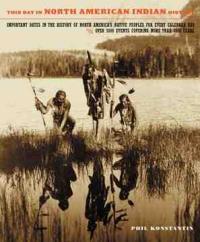 Click on the cover to order a copy or to get more info.
|
This Day in North American Indian History
This Day in North American Indian History is a one-of-a-kind, vastly
entertaining and informative book covering over 5000 years of North American Indian
history, culture, and lore. Wide-ranging, it covers over 4,000 important events
involving the native peoples of North America in a unique day-by-day format.
The thousands of entries in This Day in North American Indian History weave
a compelling and comprehensive mosaic of North American Indian history spanning more
than five millennia-every entry an exciting opening into the fascinating but little-
known history of American Indians.
Over 100 photographs and illustrations - This book has 480 pages, weighs 2.2 pounds and
is 8" by 9.5" in size. The Dates, Names and "Moons" section of these pages are based
on the book. |
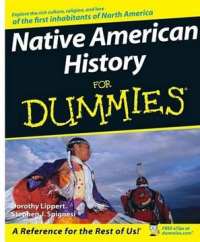
This is the cover to my 4th book. Click here to got more info, or to order a copy or to get more info."
|
Native American History For Dummies
I wrote six of the twenty-four chapters in this book. I am credited with being the technical editor.
Book Description:
Native American History For Dummies introduces readers to the thousand-year-plus
history of the first inhabitants of North America and explains their influence on
the European settlement of the continent. Covering the history and customs of the
scores of tribes that once populated the land, this friendly guide features vivid
studies of the lives of such icons as Pocahontas, Sitting Bull, and Sacagawea;
discusses warfare and famous battles, offering new perspectives from both battle
lines; and includes new archaeological and forensic evidence, as well as oral
histories that show events from the perspective of these indigenous peoples. The
authors worked in concert with Native American authorities, institutions, and
historical experts to provide a wide range of insight and information.
|

This is the cover to my 3rd book. Click here to got more info, or to order a copy or to get more info
|
Treaties With American Indians I wrote an article and several appendix items for this book.
Clips from a review on Amazon.com: *Starred Review* In the 93 years from 1778 until 1871, there were
more than 400 treaties negotiated by Indian agents and government officials.
Editor Fixico and more than 150 contributors have crafted a three volume comprehensive tool that will
soon become essential for anyone interested in the topic.
A resource section with lists of ?Alternate Tribal Names and Spellings,? ?Tribal Name Meanings,?
(<---- I wrote this part) Treaties by Tribe,? and ?Common Treaty Names? and a bibliography and
comprehensive index are repeated in each volume. This
impressive set has a place in any academic library that supports a Native American studies or
American history curriculum. It is the most comprehensive source of information on Canadian-Indian treaties and
U.S.-Indian treaties. Also available as an e-book.
|

"The Wacky World of Laws"
It was just released in May 2009.
|
The Wacky World of Laws. Click on the cover to order a copy or to get more info.
The Wacky World of Laws is a compilation of U.S. and International Laws that are out of the ordinary.
With the U.S. churning out 500,000 new laws every year and 2 million regulations annually, this book
is the ideal go-to book fro everyone who wants a good laugh at the expense of our legal system. Law
so often can be boring! Now with The Wacky World of Laws, you can be the hit of any water cooler
conversation, and amaze your friends with precious legal nuggets.
I wrote most of this book. It is my fifth book.
|
(copyright, © Phil Konstantin, 1996-2013)

Return to Previous Website

since September 4, 2005