June 2008 Newsletter from
"This Day in North American Indian History"
by Phil Konstantin
Copyright © Phil Konstantin (1996-2010)
Click Here To Return To The Previous Website
.
.
.
.
.
.
======================
X+X+X+X+X+X+X+X+X+X+X+X+X
======================

Greetings,

I am sorry for the delay in this month's newsletter. My home computer
has crashed. Somehow, some trojan software got into a document I
received. It wrecked havok with my operating system. It looks like I am
going to have to take my computer into the shop to get it operating
again.

So, this will be in a different format from what I normally do. I'll
send out another newsletter when i get up and running again.

Phil

========================
X+X+X+X+X+X+X+X+X+X+X+X+X+X
========================


========================
X+X+X+X+X+X+X+X+X+X+X+X+X+X
========================

Articles, etc....
-------------

Exhibit: Baseball’s League of Nations: A Tribute to Native Americans in
Baseball
A half century before Jackie Robinson officially integrated America's
National Pastime, Louis Sockalexis, a Native American of the Penobscot
Nation, played outfield for the Major League Cleveland Spiders -- the
year, 1897.
The little known history of Native Americans' contribution to baseball
is chronicled in an exhibition at the *Iroquois Indian Museum, in Howes
Cave, NY*, near Cooperstown, home of Major League Baseball's National
Hall of Fame, three hours from NYC, that runs through 2008.
The exhibit also examines Native American logos and mascots and how
baseball was used to assimilate Native American children into American
culture, barnstorming teams of the 20th century and Native women's role
in baseball. It continues to the present with contemporary players
Yankee pitcher Joba Chamberlain, Winnebago, and Red Sox centerfielder,
Jacoby Ellsbury, Navajo.
All-Star festival July 12-13 with Native American players, artists,
speakers and performers, all with a focus America's game.
Sunday, June 8 - Baseball's League of Nations was featured in the New
York Times Sports Section
www.nytimes.com/2008/06/08/sports/baseball/08cheer.html?ex=1213588800&en=b3ea06122ad1744e&ei=5070&emc=eta1


Recently featured on NPR's "Only A Game."
http://www.northcountrypublicradio.org/news/archive.php?id=11285

Contact:
Erynne Ansel-McCabe ... 518 296 8949
Martha Cid ... 917 584 6059
www.iroquoismuseum.org


-------------------

- A Pictorial History of the Tohono O'odham Published: For those who
think the Tohono O'odham are all about casinos and fry bread, this book
should be a real eye-opener. Authored by archaeologist Allan J.
McIntyre, "The Tohono O'odham and Pimeria Alta" is the first
photographic history book written about the people formerly known as the
Papago.
http://www.azstarnet.com/allheadlines/242574

- Take a Peak at the Past at Pueblo Grande: Stare into a pit house at
Pueblo Grande Museum, and you'll get a taste of the Hohokam people and
their hardscrabble lives. Look around the ruins and you can almost see
it one millennia earlier: Women grinding corn under wood arbors; men
scratching canals from the banks of the rolling Salt River - then a
Southwest 727 lumbers across your sightline and you remember you're in
east Phoenix.
http://www.eastvalleytribune.com/story/117963


- Mimbres Pottery Recovered from Possible Looters: Taos, Chama and
Silver City homes were searched last month in an ongoing probe into
illegal excavation of Mimbres pottery. The investigation began in late
April when someone witnessed what they believed was an illegal dig in
the Gila National Forest and called the Catron County sheriff. "They
responded, and they found items in the car, interviewed the individuals
and then forwarded it on to the Forest Service for additional
investigation," said Kathy DeLucas of the Carson National Forest in
Taos.
http://www.cdarc.org/page/jpjj - Santa Fe New Mexican

- Crow Canyon Studying Ancient Agricultural Techniques: Corn may seem
like an impossible dryland crop for the Four Corners region. With an
annual rainfall of 13 inches and soils full of clay, it's certainly not
Iowa. Yet the early Ancestral Puebloans successfully grew enough corn,
beans and squash without irrigation in a short growing season to support
populations that equaled today's population in Montezuma County. How did
they do it? That's the answer being sought by a Pueblo Farming Project
at Crow Canyon Archaeological Center northwest of Cortez.
http://www.cdarc.org/page/i4w5 - Cortez Journal

- Preserve Petroglyphs: They look a little like ancient graffiti - the
doodlings of an ancient hunter who was better with a chisel than a bow.
And maybe that is why prehistoric petroglyphs don't garner the care or
respect they deserve. People look at them and don't see the value. But
the value is there.
http://deseretnews.com/dn/view/0,5143,700231226,00.html

- The Southwest as a Tri-Cultural Region: From my roof I can look west
and see Mount Taylor, which looms above Grants, a small New Mexico city
built on the dreams of unmeterably cheap electricity, thanks to the
existence there of vast seams of uranium ore. Mount Taylor is one of the
four sacred mountains of the Navajo, and you can't see Mount Taylor
without also thinking about San Francisco Peaks, a mountain whose three
peaks rise above Flagstaff, Arizona, 400 miles west of here. It's
another mountain sacred to the Navajo and is also the winter home of the
Hopi rain spirits, the kachinas. When you see clouds building up over
San Francisco Peaks, the Hopi say, it is the kachinas rehearsing the
business of bringing rain to Hopi cornfields.
http://www.cdarc.org/page/jyph - Mother Earth News

- Rafting though Ancient Places: Our first stop was Butler Wash, where a
series of petroglyphs 100 yards from the river's northern bank stretched
so far along an overhanging hunk of sandstone they resembled an
elaborate frieze. About 10 feet off the ground, bighorn sheep, ducks,
spirals, zigzags and human figures scratched in white and dating from
5000 B.C. covered the terra-cotta-colored rock.
http://www.cdarc.org/page/l19c - New York Times, Site may require user
regsistration.

- Hopi History on Display at Homol'ovi Ruins State Park: The park, just
off Interstate 40 north of Winslow, was created in 1993 at the urging of
the Hopis, who were desperate to save their ancient villages from
thieves and vandals. The ruins of villages from the 1200s to the late
1300s were filled with thousands of pots, luring unscrupulous
collectors. "In the 1960s, a guy came in here with a backhoe," Berggren
says. The thieves stole the pots and destroyed much of the surrounding
village structures, all of which are sacred to the Hopis. It would be
like tourists chipping off pieces of the Sistine Chapel ceiling when
they visited. "We estimate we've lost 95 percent of the pots," Berggren
says.
http://www.azcentral.com/travel/arizona/features/articles/0530homolovi0601.html


- More on the Oil Drilling in Nine Mile Canyon: Along Utah's Nine Mile
Canyon lies what some call the longest art gallery in the world -
thousands of prehistoric rock carvings and paintings of bighorn sheep
and other wildlife, hunters wielding spears, and warriors engaged in
hand-to-hand combat. But now, a dramatic increase in natural gas
drilling is proposed on the plateau above the canyon, and
preservationists fear trucks will kick up dust that will cover over the
images.
http://www.physorg.com/news131207962.html

-- Public Meeting on Traditional Cultural Property Designation for Mt.
Taylor to be Held June 14th. A public meeting to reconsider the
emergency nomination of Mount Taylor as a Traditional Cultural Property
will take place June 14 at in the Cibola County Convention Room. The
state's Cultural Properties Review Committee is holding a regularly
scheduled meeting, set to start at 10:30 a.m. The discussion and vote on
the mountain's emergency listing is item number nine on the agenda. The
Mount Taylor portion is scheduled to begin at 1 p.m.. That item includes
a summary of comments of the Feb. 22 special meeting, witness
presentations and public comments.
http://www.cibolabeacon.com/articles/2008/05/29/news/news1.txt

- Arizona Preservation Foundation seeking Arizona's Most Endangered
Places: The Arizona Preservation Foundation is accepting nominations for
its 2008 list of Arizona's Most Endangered Historic Places. Compiled by
preservation professionals and historians, the list identifies
critically endangered properties of major historical or archaeological
significance to the state. Properties selected for the Most Endangered
Historic Places list will receive the Foundations assistance in
developing support to remove the threat. The list will be announced at
the 6th Annual Arizona Statewide Historic Preservation Conference, June
12-14, 2008 in Rio Rico, AZ.
http://www.cdarc.org/page/59kw - Yahoo News
http://www.azpreservation.org

- Travelogue - Canyon De Chelly: "People visit Canyon de Chelly for the
scenery, history and the chance to learn about Navajo culture," said
Rosanda Bahe, motel supervisor for Thunderbird Lodge, the only lodging
facility inside Canyon de Chelly National Monument. "The mood here is
tranquil, and it doesn't seem to take our guests long to adapt to the
slower pace of the canyon."
http://travelvideo.tv/news/more.php?id=14435_0_1_0_M


- National Geographic Declares Chaco Canyon one of 50 "Tours of a
Lifetime:" National Geographic Traveler magazine has selected a high-end
Chaco Canyon camping tour as one of the publication's annual "50 Tours
of a Lifetime." The tour, Southwest Safari Camps at Chaco Canyon, is one
of three adventure trips within the United States, and 50 within the
world, included in the publication's May/June issue. The magazine calls
its selections, which include tours in North Korea and Antarctica, the
"most transformative, sustainable, and authentic experiences" in global
guided tours. Norie Quintos, a senior editor at Traveler, said the staff
chose the Chaco Canyon tour on the recommendations of travel experts as
well as those who had been on the trip.
http://www.daily-times.com/ci_9200331?source=most_emailed

- Crow Canyon to Honor Ancient Agriculture of the Four Corners with
Traditional Puebloan Gardens: On May 27 and 28, Pueblo men at Crow
Canyon Archaeological Center will plant corn, beans and squash in the
style of their ancestors, who lived in what is now southwestern Colorado
until the late 13th century. Some of the many thousands of dwellings,
villages, fields and other sites the ancients left behind when they
moved on to points south include those in Ute Mountain Ute Tribal Park,
Mesa Verde National Park and Canyons of the Ancients National Monument.
http://www.indiancountry.com/content.cfm?id=1096417259


- Hyperspectral Imagery the Archaeology of Ancient Mexico: Satellite
imagery obtained from NASA will help archeologist Bill Middleton peer
into the ancient Mexican past. In a novel archeological application,
multi- and hyperspectral data will help build the most accurate and most
detailed landscape map that exists of the southern state of Oaxaca,
where the Zapotec people formed the first state-level and urban society
in Mexico.
http://www.sciencedaily.com/releases/2008/05/080513112348.htm

- Teenage Looters Use Human Remains for Drug Paraphernalia: hree
Kingwood teens have been arrested and accused of digging up a secluded
grave and removing a skull in Humble, a city north of Houston. Teens
from Kingwood, told Houston police that around March 15 they and a
16-year old juvenile dug up a grave, removed the skull from the coffin
and converted it into a "bong," a device used to smoke marijuana,
according to court documents.
http://www.nbc5i.com/news/16211185/detail.html?rss=dfw&psp=news

-

=======================

http://www.latimes.com/news/nationworld/nation/la-na-badlands8-2008jun08,0,270469,full.story

From the Los Angeles Times

Oglala Sioux could regain Badlands national parkland


The National Park Service is considering giving back the southern half,
which was confiscated from the Indian tribe during World War II.
By Nicholas Riccardi
Los Angeles Times Staff Writer

June 8, 2008

BADLANDS NATIONAL PARK, S.D. The southern half of this swath of
grasslands and chiseled pink spires looks untouched from a distance.
Closer up, the scars of history are easy to see.

Unexploded bombs lie in ravines, a reminder of when the military
confiscated the land from the Oglala Sioux tribe during World War II and
turned it into an artillery range. Poachers who have stolen thousands of
fossils over the years have left gouges in the landscape. On a plateau,
a solitary makeshift hut sits ringed by empty Coke cans and shaving
cream canisters. It is the only remnant of a three-year occupation by
militant tribal activists who had demanded that the land be returned.

Now the National Park Service is contemplating doing just that: giving
the 133,000-acre southern half of Badlands National Park back to the
tribe. The northern half, which has a paved road and a visitor center,
would remain with the park system.

The park service has dissolved 23 parks and historic sites since 1930,
but none has been returned to tribes. "It's really exciting for us to
think about walking down this road," said Sandra J. Washington, head of
planning for the service's Omaha office, which oversees Badlands. "The
intention is to be as honorable as possible."

The change would require congressional approval and the process is in
its earliest stages, with officials still to decide whether the south
section should be handed over solely to the tribal government, become a
separate park run by the tribe with help from the park service, or left
as is.

Tribal members seem torn. Some say they should be able to build homes
there. Others push for a pristine nature preserve. Still others want
more development to draw tourists to the massive fossils that remain.

The park service recently held several forums on the reservation and
elsewhere in the region to gauge public support for these options. At a
forum at Crazy Horse School in Wanblee, S.D., William La Mont, 44, was
one of several who argued that the tribe would still need the service's
help. "The tribe's not ready," he said. "The tribe's in the red."

Keith Janis, 48, one of the activists who staged the 2000 occupation,
believes the land should be returned to its original owners or their
descendants to do with as they please.

"That's not respecting the rights of the people who have nothing," Janis
said of the proposal that the land remain a park. "The whole national
park system is environmental racism against the Indian people of this
country."

Many of the most renowned national parks -- Yellowstone, Glacier, Grand
Canyon -- were formed after the federal government forced tribes from
the land.

"The national park is a sort of wonderful ideal, but it's an ideal that
was created," said Karl Jacoby, a professor at Brown University who
studies Western history. "There weren't empty wilderness areas in the
United States. They had to be created by the removal of Indians."

The confiscation of the land that is now the south end of Badlands
National Park is fresher in locals' memories. In 1942, the military gave
more than 800 people a week to move out.

Anita Ecoffey, 65, remembers her father describing what it was like to
flee from his home taking only what he could carry, leaving the land
where he had buried his parents.

"To me this is worse than what happened at Wounded Knee," said Ecoffey,
recalling the infamous 1890 massacre of Sioux by the U.S. Army. "These
were people's homes."

Legally, the land remained tribal property. But the government continued
to oversee it after the war.

Control of it was handed to the National Park Service and the area was
incorporated into Badlands National Monument, which became a national
park in 1978.

Under an agreement signed in 1976, the park service operates the south
unit jointly with Oglala Sioux park officials.

But the tribe has complained that the service has never lived up to many
of its promises.

The government said it would build a cultural/visitor center to draw
tourists to the southern half of the park, about 40 miles southeast of
Rapid City. Instead, the only visitor center in the south is a converted
trailer along an isolated stretch of blacktop. Until recently, Oglala
Sioux rangers complained that the park service barely gave them any
support, making it impossible to patrol the area and giving fossil
poachers free rein.

"Everybody just takes advantage of it," said Birgil Kills Straight,
executive director of the Oglala Sioux Parks and Recreation Authority.

Relations have improved since Paige Baker, a Mandan/Hidatsa Indian
raised in North Dakota, became superintendent of Badlands National Park
in 2006. Baker stocked the park gift shop with books on Indian history
and argued for a change in the southern section's status. Top Interior
Department officials in Washington have agreed to abide by his
recommendations, he said.

The park service "has got to listen to tribes," Baker said. "We have not
done that as well as we should."

On the 30,000-member Pine Ridge Reservation, a patchwork of tiny towns
and ranches centered in the nation's second-poorest county, tribal
members aren't accustomed to trusting the federal government. But they
say they believe the talk of the park's return is legitimate.

At the Wanblee forum, Marie Randall, 88, pointed proudly at the photos
of the south unit on a bilingual flier the park service was handing out.
"This is our foundation, this is our life," she said. "As long as we
have this, the Indian will never end."

Washington, of the park service's Omaha office, said that the south
section of Badlands is one of two national parks where the land is owned
by a tribe and operated jointly with that tribe. The other is Canyon de
Chelly National Park in Arizona, on Navajo land. Other parklands were
taken from tribes long ago and their acreage is not currently owned by
tribes. It's unlikely the park service would take similar steps with
those parks.

Park service officials say they were already contemplating the hand-over
before the 2000 occupation. A handful of tribal members took over a high
tableland known as the Stronghold, believed to be the spot where the
Sioux made their last stand against the U.S. military after fleeing from
Wounded Knee.

Janis said he believed it was the aggressive stance during the
occupation that pushed the park service to propose giving back the land.
He said the terrain would be more protected that way. "The people took
better care of it when it was theirs," he said. "Even the fossils were
respected."

Some environmental groups are enthusiastic about the proposal. Jonathan
Proctor, Southern Rockies/Great Plains representative for Defenders of
Wildlife, said the Oglala Sioux had been better environmental stewards
than many states. Pine Ridge has already helped restore declining
populations of long-tailed fox and black-footed ferrets.

"The tribes don't get enough respect for what they do for wildlife,"
Proctor said. "It's not our land; it belongs to the Oglala Sioux. Who
are we to tell them what to do with their land?"

nicholas.riccardi@

latimes.com

----------------------

Greetings,

Below is a copy of my email to the Columbus Police protesting the
treatment of marchers during the Longest Walk. A copy of this message
was also sent to the Governor.

Please share with others whatever is appropriate and, if you wish,
contact the governor and Columbus police with your comments. Ohio is the
ONLY place that has harassed these peaceful and spiritual marchers
Contact the Governor: http://governor.ohio.gov/Default.aspx?tabid=448
Email Columbus Police: e-m-@columbuspolice.org

Thanks,
Gina Boltz
********************************************************************
To Columbus police and whom it may concern:
[News Article below]

To think that this could happen in Ohio just sickens me. I've promoted
and followed this walk of peaceful marchers since they left Alcatraz.
They are good and respected people on a spiritual mission. The only
reason my husband and I didn't join them in Columbus was because of gas
prices.

Our state was and is home to many great Native Nations and people. I am
appalled and embarrassed that this harassment happened in my home state
which I love. Believe me when I say many Ohioans are trying to educate
others about Native cultures. It's time the Columbus police sat up and
listened.

On behalf of our state and those supporting this march, I demand an
apology from both the governor's office and the Columbus police.

Gina Boltz
Director, Native Village Publications
4848 North Crestridge Drive
Toledo, Ohio 43623
http://www.nativevillage.org
Secretary, Link Center Foundation
www.linkcenterfoundation.org

Article: Ohio police attack Long Walkers

By Brenda Norrell
Censored News

COLUMBUS Ohio – Unprovoked Columbus, Ohio police, attacked Long Walkers,
by first pointing a taser at the head of Michael Lane and then forcing
Luv the Mezenger to the ground and handcuffing him.
The Longest Walk Northern Route was walking this prayer through Columbus
on Monday, June 2, when squad cars and arrest wagons arrived. Without
discussion of the purpose of the prayer walk, or even verify that the
Ohio Department of Transportation had been notified of the prayer walk,
police attacked the walkers.
Michael Lane, who arrived on the walk with his wife, Sharon Heta, Maori,
and their children from New Zealand, was targeted by police with a
taser.
As dozens of police came at the walkers, a police officer held a taser
three feet away from Lane’s head.
Luv the Mezenger from Los Angeles went to the aid of Lane. At that
point, police officers threw Luv on the ground and handcuffed him. Luv
has been on the walk since it left California in February, walking over
a stretch of the Sierra Nevada Mountains on snowshoes.
Lane, who has a law degree from the University of Arizona, said the
worst part of being targeted by a police officer with a taser was that
it terrified his daughters who only knew that a gun was being pointed at
their father’s head.
Across the continent, police-induced deaths from tasers have increased.
Luv suffered minor injuries from the police attack. Police made no
arrests.
Govinda Dalton, broadcasting on the live Longest Walk Talk radio on
Earthcycles web radio, said, “They came to arrest the walkers with paddy
wagons without even having a discussion as to what the walk is about, or
the fact that the Ohio Department of Transportation has already been
contacted.”
The harassment by Ohio police continued today, Tuesday, June 3, when
police ordered Longest Walk drummers off an area at the Ohio State
Capitol. However, the Long Walkers continued with their press conference
and aired statements on their loud speaker at the capitol.
It has been almost four months since the prayer walk began on Alcatraz,
on Feb. 11. Until June 2, there were no attacks on the walkers. In fact,
the majority of the governors in the states that the northern route has
walked through have issued proclamations of support for the Longest Walk
2.
The Longest Walk 2 for Mother Earth and protection of sacred places is
being walked thirty years after the original 1978 Longest Walk, a prayer
walk for Indian rights and the recognition of the inherent sovereignty
of Indian people and Indian Nations.
Listen for interviews on Earthcycles’ Longest Walk Talk Radio which has
archived 400 interviews with walkers and people along the route since
the walk left Alcatraz, on issues all across America.
The radio topics, voiced by people across America, have included the
rise of the police state in the United States, the targeting of American
Indians by city, state and federal police, the rise of xenophobia and
the television-fueled, fear-mongering by the Bush administration in the
violations of federal law and rights guaranteed by the U.S.
Constitution, including free speech.
The radio topics include global climate change, nuclear testing and gold
mining on Western Shoshone lands, Paiute traditional hunting and
gathering rights, scientists battling Paiutes for 10,000 year old Spirit
Cave Man remains, the Kickapoo Nation without water in Kansas, Navajo
coal mining and relocation, Nazi-style forces at the US/Mexico border
and the destruction of Tohono O’odham ancestor remains for the border
wall.
Those interviewed, including Mohawks at the northern border and Maori
from New Zealand, discussed Canada and New Zealand’s oppression
Indigenous Peoples and attacks on sovereign peoples. There are also
interviews on America’s economic collapse and war profiteering, the
proliferation of power plants to enrich Bush’s corporate donors,
profiteering by private security contractors and private prisons for
migrants and the cost of the bogus war in Iraq: American Indians and
people of color considered expendables to die in Iraq.
Walkers on the northern route converge with walkers on the southern
route to march into Washington on July 11.
Listen to the latest interviews about the prayer walkers attacked by
Ohio police:
http://www.earthcycles.net
Posted by brendanorrell @ gmail.com at 3:32 PM


=================

SMITHSONIAN INSTITUTION, NATIONAL MUSEUM OF THE AMERICAN INDIAN,
INTERNSHIP PROGRAM

Targeted Fields
Open to all fields.

Open To
Prospective/Current Graduate Students.

Citizenship
No citizenship requirements.

Eligibility Requirements
Must be currently enrolled in a university program or have completed the


program no more than six months before application deadline. A
cumulative GPA of 3.0 or its equivalen t is generally expected.

Stipend
A limited number of stipends are targeted primarily at American Indian,
Native Hawaiian and Alaska Native students. Stipends are awarded, based
on need and merit and are not sufficient to cov er all expenses. Housing


may be provided in the summer.

Deadline
7/12/2008 -for fall, 10/10/2008 -for winter, 11/20/2008 -for spring, and


2/6/2009 -for summer.

Program Description
Four internship sessions lasting 10-weeks are available throughout the
year for students interested in gaining museum practice and program
development experience.

For More Information

Internship Program
National Museum of the American Indian
Smithsonian Institution
Cultural Resources Center
Community and Constituent Services Department
4220 Silver Hill Road
Suitland, MD 20746-2863
(301) 238-1540
NMAI-@si.eduwww.nmai.si.edu/subpage.cfm?subpage=collaboration&second=internships


-----

A new native film has just been released starring Adam Beach, see the
trailer.

View Trailer http://www.olderthanamerica.com/

Tribal Alliance Presents:

OLDER THAN AMERICA a film by Georgina Lightning

A woman's haunting visions reveal a Catholic priests sinister plot to
silence her mother from speaking the truth about the atrocities that
occurred at a Native American boarding school. A contemporary drama of
suspense, > Older Than America focuses on the lasting impact of the
cultural genocide that occurred at such schools.

-------------------------
Article from Navajo Times
http://www.navajotimes.com/news/050808vetfilm.php
Film on Navajo veterans uncovers painful past
By Cindy Yurth
Tséyi' Bureau

CHINLE, May 8, 2008

A new documentary about Navajo veterans premiered here last Wednesday to


its toughest possible audience: Navajo veterans.

For the most part, "Spirit Warriors: A Legacy of the Navajo Veteran" got


rave reviews when it was unveiled at a Central Agency veterans
conference. Some vets wished it could have been longer.

"It seemed like you just got following one guy and they would switch to
a different guy," complained Korean War veteran Clarence Gorman. "But it


was interesting hearing all those people express their views.

"Wherever it may be shown," he said, "I hope people will understand what


Navajos have gone through for this country."

The documentary, by award-winning independent film company Guerilla
Docs, relies mostly on interviews filmmaker Randall Wilson collected
over two week-long visits to the Navajo Nation, interspersed with
historical footage from the 1920s through the 1960s.

"I went to the National Archives in College Park, Md., and spent seven
days locked in their library," Wilson said. "They had some wonderful
footage."

Wilson said he was inspired to do a series of documentaries on Native
American veterans while filming a miniseries on Vietnam vets.

website for Guerrila Productions:
http://www.guerrilladocs.com/production_swarriors.shtml

==================

Canada apologies for 'failing-torturing' Native Indian people

You will not see an American president or candidate on TV making these
statements! Even in this year of 2008!!!

Click on picture to watch video:
_http://www.indianz. com/News/ 2008/009265. asp_
(http://www.indianz. com/News/ 2008/009265. asp)

The Canadian government officially apologized on Wednesday for its
treatment
of Native at residential schools.
In a historic speech, _Prime Minister Stephen Harper_
(http://www.indianz. com/my.asp? url=http: //pm.gc.ca/) said the goal of
the schools was to assimilate
Native children. Students were barred from speaking their language and
practicing their culture.
_http://www.indianz. com/my.asp? url=http: //pm.gc.ca/ _
(http://www.indianz. com/my.asp? url=http: //pm.gc.ca/)
"Indeed, some sought, as it was infamously said, 'to kill the Indian in
the
child,' Harper said in the _speech_
(http://www.indianz. com/my.asp? url=http: //www.cbc. ca/canada/
story/2008/ 06/11/pm- statement. html) before the House of
Commons in the Parliament.
_http://www.indianz. com/my.asp? url=http: //www.cbc. ca/canada/
story/2008/ 06/11/p
m-statement. html_
(http://www.indianz. com/my.asp? url=http: //www.cbc. ca/canada/
story/2008/ 06/11/pm- statement. html)
Beyond being forcibly separated from their communities, Harper
acknowledged
that Native people suffered physical, sexual and emotional abuse at the
schools. He said their mistreatment contributed directly to high rates
of
unemployment, poverty, suicide and other social problems that persist
today.
"The government of Canada sincerely apologizes and asks the forgiveness
of
the Aboriginal peoples of this country for failing them so profoundly,"
Harper
said.
The apology is one component of a landmark settlement between the
government
and former students who sued over their treatment at the schools. Every
student won a share of a $1.9 billion payout, the majority of which has
been
distributed.
In addition to the payout and the apology, the settlement establishes
the
_Indian Residential Schools Truth and Reconciliation Commission_
(http://www.indianz. com/my.asp? url=http: //www.ainc- inac.gc.ca/
rqpi/a6-eng. asp) . Harper said
the commission will promote public awareness and education about the
school
system, which began in the 1870s and continued for 100 years.
_http://www.indianz. com/my.asp? url=http: //www.ainc- inac.gc.ca/
rqpi/a6-eng. asp_

(http://www.indianz. com/my.asp? url=http: //www.ainc- inac.gc.ca/
rqpi/a6-eng. asp)
The schools were funded by the government and managed by a number of
Christian churches. The Anglican, Catholic, Presbyterian and United
churches
previously apologized for their role in the tragedy.
Some churches lost a number of lawsuits and were ordered to pay damages
to
former students. An October 2005 court ruling in one case held the
churches and
the government liable for the abuses and the settlement package was
announced a month later.
"We heard the government of Canada take full responsibility for this
dreadful chapter in our shared history," said _Assembly of First
Nations_
(http://www.indianz. com/my.asp? url=http: //www.afn. ca/) Chief Phil
Fontaine, "We heard
the prime minister declare that this will never happen again. Finally,
we
heard Canada say it is sorry."
_http://www.indianz. com/my.asp? url=http: //www.afn. ca/_
(http://www.indianz. com/my.asp? url=http: //www.afn. ca/)
Fontaine and AFN were instrumental in securing the settlement, which
stands
in contrast to the situation in the United States. For a century,
American
Indian and Alaska Native students were forced to attend boarding schools
under
federal policies of assimilation.

The Senate and the House have considered non-binding resolutions to
apologize to Native people in the U.S. for their treatment in boarding
schools and
for other negative policies. However, the legislation specifically
states that
no money is attached to the apology.
Even so, the Bush administration actively _delayed_
(http://www.indianz. com/News/ 2004/003055. asp) consideration of the
resolution as it was moving
towards quick passage in the summer of 2004. The apology has since been
included in
the Senate's version of the Indian Health Care Improvement Act, which
also
has faced opposition from the White House.
_http://www.indianz. com/News/ 2004/003055. asp_
(http://www.indianz. com/News/ 2004/003055. asp)
A group of Sioux tribal members who attended _Bureau of Indian Affairs_
(http://www.indianz. com/my.asp? url=http: //www.doi. gov/bia/) boarding
schools
filed a $25 billion claim against the U.S. government. A federal judge
_dismissed_ (http://www.indianz. com/News/ 2004/005247. asp) the case in
November 2004,
citing provisions in a treaty that required claims to be heard by the
BIA
before going to the courts.
_http://www.indianz. com/my.asp? url=http: //www.doi. gov/bia/_
(http://www.indianz. com/my.asp? url=http: //www.doi. gov/bia/)

_http://www.indianz. com/News/ 2004/005247. asp_
(http://www.indianz. com/News/ 2004/005247. asp)
____________ _________ _________ ______

We speak today from our passed _www.UnitedNativeAm erica.com_
(http://www.UnitedNa tiveAmerica. com)

Fourth Grade Student Beaten and Tortured By Teacher
_http://www.californ iachronicle. com/articles/ 38547_
(http://www.californ iachronicle. com/articles/ 38547)


========================
X+X+X+X+X+X+X+X+X+X+X+X+X+X
========================

That's all for now....

Phil
Monthly Newsletter
Put your e-mail address in the box below and click the button to receive my monthly e-mail newsletter. The newsletter features historical information, a "Link of the Month" and other related material.

Click on the image below to go to......
 My Website's Home Page
 |
 Links: (8,700 and counting)
 |
 Tribal Names
 |
 Indian Moons
 |
 Personal Photos
 |
 My Biography
 |
 Sleepy Driver
 |
 The Space Program
 |
 Ancient Ruins in Central America
 |
 Maya Ruins in Mexico
 |
 Whales
 |
 Awards & Webrings
 |
 Cherokee Holiday 2001
 |
 Cherokee Enrollment
 |
My Newsletters |
 My Store
 |
 California Highway Patrol
 |
 Indian Era Forts
 |
 Articles I Wrote
 |
Northwestern USA Indian Country |
American Indian Museum in D.C. 2004 |
 Movie & Book Reviews
 |
 KUSI TV, my other job
 |
Mesa Verde and Utah in 2006 |
 My Mortgage Loan Company
 |
2006 SDSU Powwow |
|
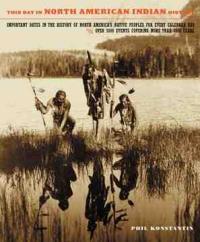
Four of the five books I have worked on. I either wrote, co-wrote,
or contributed to each of these beeks
 Click on the cover to order a copy or to get more info.
|
This Day in North American Indian History
This Day in North American Indian History is a one-of-a-kind, vastly
entertaining and informative book covering over 5000 years of North American Indian
history, culture, and lore. Wide-ranging, it covers over 4,000 important events
involving the native peoples of North America in a unique day-by-day format.
The thousands of entries in This Day in North American Indian History weave
a compelling and comprehensive mosaic of North American Indian history spanning more
than five millennia-every entry an exciting opening into the fascinating but little-
known history of American Indians.
Over 100 photographs and illustrations - This book has 480 pages, weighs 2.2 pounds and
is 8" by 9.5" in size. The Dates, Names and "Moons" section of these pages are based
on the book. |
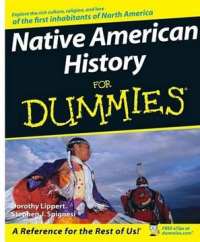
This is the cover to my 4th book. Click here to got more info, or to order a copy or to get more info."
|
Native American History For Dummies
I wrote six of the twenty-four chapters in this book. I am credited with being the technical editor.
Book Description:
Native American History For Dummies introduces readers to the thousand-year-plus
history of the first inhabitants of North America and explains their influence on
the European settlement of the continent. Covering the history and customs of the
scores of tribes that once populated the land, this friendly guide features vivid
studies of the lives of such icons as Pocahontas, Sitting Bull, and Sacagawea;
discusses warfare and famous battles, offering new perspectives from both battle
lines; and includes new archaeological and forensic evidence, as well as oral
histories that show events from the perspective of these indigenous peoples. The
authors worked in concert with Native American authorities, institutions, and
historical experts to provide a wide range of insight and information.
|

This is the cover to my 3rd book. Click here to got more info, or to order a copy or to get more info
|
Treaties With American Indians I wrote an article and several appendix items for this book.
Clips from a review on Amazon.com: *Starred Review* In the 93 years from 1778 until 1871, there were
more than 400 treaties negotiated by Indian agents and government officials.
Editor Fixico and more than 150 contributors have crafted a three volume comprehensive tool that will
soon become essential for anyone interested in the topic.
A resource section with lists of ?Alternate Tribal Names and Spellings,? ?Tribal Name Meanings,?
(<---- I wrote this part) Treaties by Tribe,? and ?Common Treaty Names? and a bibliography and
comprehensive index are repeated in each volume. This
impressive set has a place in any academic library that supports a Native American studies or
American history curriculum. It is the most comprehensive source of information on Canadian-Indian treaties and
U.S.-Indian treaties. Also available as an e-book.
|

"The Wacky World of Laws"
It was just released in May 2009.
|
The Wacky World of Laws. Click on the cover to order a copy or to get more info.
The Wacky World of Laws is a compilation of U.S. and International Laws that are out of the ordinary.
With the U.S. churning out 500,000 new laws every year and 2 million regulations annually, this book
is the ideal go-to book fro everyone who wants a good laugh at the expense of our legal system. Law
so often can be boring! Now with The Wacky World of Laws, you can be the hit of any water cooler
conversation, and amaze your friends with precious legal nuggets.
I wrote most of this book. It is my fifth book.
|
(copyright, © Phil Konstantin, 2010)

Return to Previous Website

since September 4, 2005