| << Previous | Index | Next >> | ||
 |
 |
 |
 |
 |
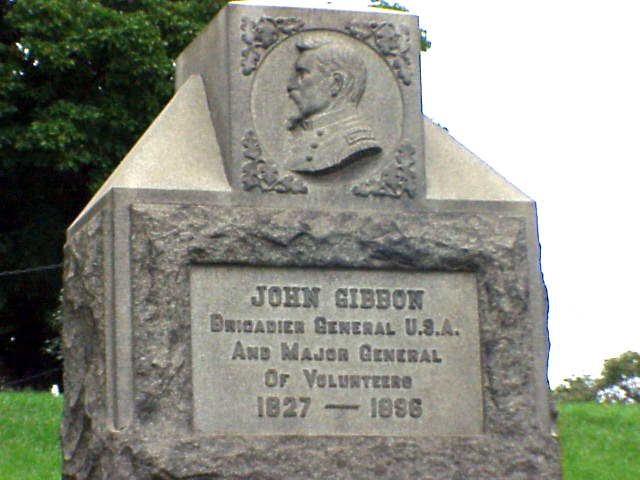
John Gibbon (April 20, 1827 – February 6, 1896) was a career United States Army officer who fought in the American Civil War and the Indian Wars. = Gibbon stayed in the army after the war. He reverted to the regular army rank of colonel and was in command of the infantry at Fort Ellis in the Montana Territory, during the campaign against the Sioux in 1876. Gibbon, General George Crook, and General Alfred Terry were to make a coordinated campaign against the Sioux and Cheyenne, but Crook was driven back at the Battle of the Rosebud, and Gibbon was not close by when Lt. Col. George A. Custer attacked a very large village on the banks of the Little Bighorn River. The Battle of the Little Bighorn resulted in the deaths of Custer and some 261 of his men. Gibbon's approach on June 26 probably saved the lives of the several hundred men under the command of Major Marcus Reno who were still under siege. Gibbon arrived the next day and helped to bury the dead and evacuate the wounded. Gibbon was still in command in Montana the following year when he intercepted a telegraph from General Oliver O. Howard to cut off the Nez Percé, who were camped along the Big Hole River in western Montana. At the Battle of the Big Hole Gibbon's forces inflicted heavy losses, but became pinned down under Indian sniper fire. Gibbon held off the warriors until General Howard's forces arrived late on the second day of battle and drove them off.
Photo album created with Web Album Generator